Where Romance and History Meet - www.heartsthroughhistory.com/

Pages

Showing posts with label western. Show all posts

Tuesday, September 13, 2011

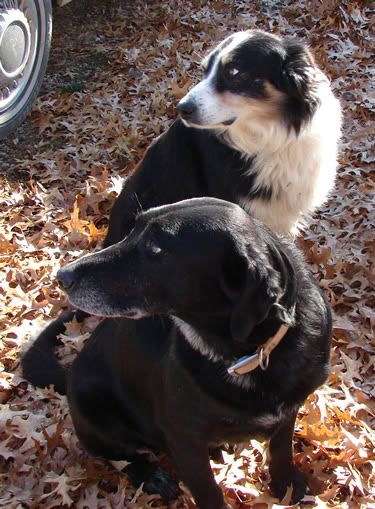
Man's best friend


Man’s best friend

Once our son’s grew up and left home, my husband and I got puppies. So now we do agility with our dogs, a Scottish terrier named Smokey and a Pembroke Welsh corgi named Bandit.

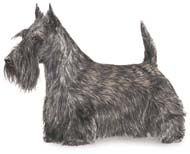


So now I’m thinking about how to incorporate dogs into my stories. Since I write (mostly) in the American west, there are plenty of opportunity to have a dog as a character.


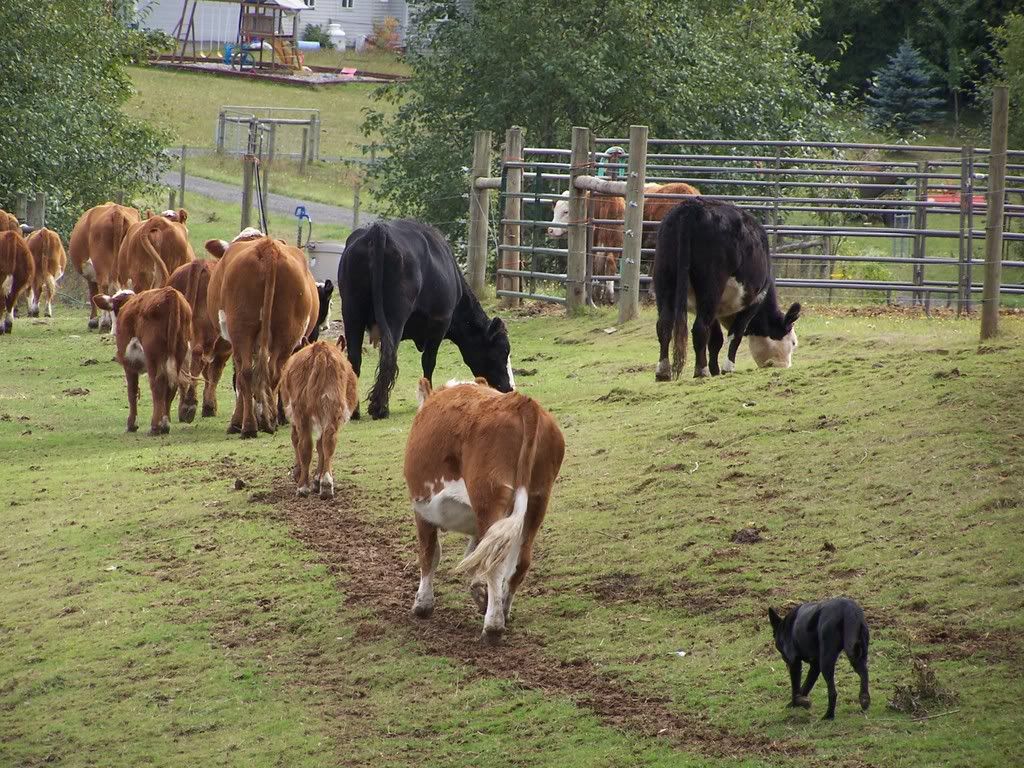
In one story the cowboy hero brings his new wife a puppy. Ranches often had dogs, as they were useful in helping drive cattle. My husband’s family had a dog, Buster, that would help is father round up the cattle. Our Welsh corgi would be over the moon if we had some cows so we could tell him to go get and drive them in for milking.


Dogs were also served to hunt vermin, especially terrier type dogs. Cats get mice, but terriers can get rats. And farmers always have grain to protect.


And, of course, all dogs are watch dogs, who bark when something out of the ordinary happens. I was always impressed by Buster, as if you drove up to my in-laws house in the Oklahoma county side, Buster would bark a warning as you drove up the long driveway. If, however, my in-laws were not at home, Buster would just lay on the porch and give you look like ‘nobody home, silly.’


I would assume that most dogs in the American west were not the purebreds we would see today at a dog show. If a hunting dog had a reputation of being a good hunter, people would want puppies from them. Same with herding dogs, or terriers on their ability.


Finally, one of the most common reason for keeping a dog was for companionship the dog provided.


And while our dogs have the run of our house, I’m pretty sure my heroine who runs a boarding house will only allow the dog in the back kitchen. Our dogs don’t know how good they have it.


Does your family have any dog stories- or do you have dogs in your stories?


Blain’s Smokey of Santee, CGC, NA & Blain’s Sundance Bandit, CGC, NA, NJW

Sunday, June 19, 2011

Manifest Destiny

by Anna Kathryn Lanier

In 1845 a magazine reporter wrote “Our manifest destiny is to overspread the continent allotted by Providence for the free development of our yearly multiplying millions.” He was, in other words, giving a moral excuse to the greed and imperial ambition of the American people to expand westward. God had predestined the United States of America to stretch from sea to shining sea and it was, therefore, the duty of the American people to spread Christianity and democracy across the continent.


The idea of Manifest Destiny did not originate with this reporter. Since 1803, when President Thomas Jefferson instigated the Louisiana Purchase, Manifest Destiny was in the works. It continued on with the acquisition of Florida and parts of Alabama and Mississippi in 1819 from Spain. In 1845 Texas, its own republic since winning independence from Mexico ten years earlier was annexed into the United States. In 1846 the long disputed border with Canada in the Northwest was finally settled to be 49 degrees latitude. In 1848 the Treaty of Guadalupe Hidalgo, ending the Mexican War, gave the U.S. New Mexico and California. And finally, in 1853, the Gadsden Purchase acquired Arizona from Mexico. This completed the contiguous states.


It was not Manifest Destiny alone, however, that spurred on the millions of the people to take the harsh, dangerous journey west. It was economic depressions in 1837 and 1841. It was word of the rich, fertile soil in Oregon. It was the gold discovered in 1848. It was greed.


As AMERICA: A Narrative History says, “Trappers and farmers, miners and merchants, hunters, ranchers, teachers, domestics, and prostitutes, among others, headed west seeking their fortunes.” THE UNITED STATES: A Brief Narrative History says, “The desire for land of their own, the search for economic opportunity, and the promise of starting over in a new region ranked high among the many and complex reasons that people decided to endure the hardships....”


The pioneers of the mid-1800's did overcome vast hardships to settle the land and fulfill Manifest Destiny. The trail alone offered up “difficulties in finding adequate food and water, hostile Indians, and the danger of being trapped by snow in the mountains.” (THE UNITED STATES) Once they reached their destination, they often had those difficulties as well as others to contend with, including death. However, the westward movement “constitutes a colorful drama of determined pioneers and cowboys overcoming all obstacles to secure their visions of freedom and opportunity amid the regions awesome vastness.” (AMERICA)


Yet, Manifest Destiny did not come without a long-lasting price to America. In addition to the hardship the pioneers suffered, “...the colonization of the Far West involved short-sighted greed and irresponsible behavior, a story of reckless exploitation that scarred the land, decimated its wildlife, and nearly exterminated the culture of Native Americans.” (AMERICA)


It is hoped that if given a chance to do it all over again, the American government and people would have done it differently. But it is doubtful it would have it would have happened any other way. The desire of the government and the desire of the people would not have changed. As one gold seeker proclaimed, “The whole emigration is wild and frantic with a desire to be pressing forward.” A desire to own land, find economic freedom, to find freedom itself in a new life. Millions of Americans and new emigrants were willing to endure the hardships and carve a place in history in the name of Manifest Destiny. And the government was glad they were.


Now, to put a writing lesson curve on this....how does your story emulate the idea of Manifest Destiny? How are your characters predestined to change their lives, their ideas, their souls? What are they willing to give up to find the brass ring across the dangerous frontier?

Leave a comment for a chance to win not one, but two prizes!  I'll  away pocket size Bath and Body Works Country Chic shower gel and lotion (drawing to be held Tuesday, June 21st after 6:00 p.m.).  AND the Seduced by History blog is giving away a free Hearts Through History Campus Workshop to one lucky June commenter.  So, double the reason to say hi!  Be sure and leave a comment.

**I'll be teaching PIONEERING WOMEN OF THE WEST at HHRW's Online Campus August 1-31, 2011. $10 for HHRW members, $20 for non-members.  Click HERE for more information. 

Anna Kathryn Lanier
Where Tumbleweeds Hang Their Hats
http://www.aklanier.com/

This article first appeared on Chatting with Anna Kathryn September 3, 2009.

Wednesday, October 13, 2010

Music hath powers -

Music hath powers –

At one of our chapter meeting we had a workshop where we listened to music and wrote a paragraph or two in response to the music. This was a new experience for some of the members, but I’ve always listened to music as a background when I write. Mostly, I choose music to give me a feel of the time and period I’m writing.

The idea is to choose music that will focus you on whatever your writing. For example, the story of KENTUCKY GREEN takes place in 1794 and involves the conflict between the Indians and the American in the what was then the Ohio Territory. The hero is part Shawnee, and much of the story takes place outside, so I had a recording (which I’ve lost) of Indian flute music that also included the sound of streams and bird songs.

I also listened to the sound track of The Last of the Mohicans*, as the look and feel of the movie was the same as my story.

When I was doing research for writing COLORADO SILVER, COLORADO GOLD, I found a great CD. The story takes place in Durango, Colorado, and he hero of the story, who now works for Wells Fargo, grew up in a saloon. Several scenes take place in a saloon. The CD I found is Durango Saloon*

Of course, for writing the romantic scenes, I have recordings of love songs. If there are lyrics, I tend to listen, so all the music has to be instrumental, so it just washes over me.

My current work are westerns set in Texas. And, if you’ve read my previous blog you know I love western movies*. So I have several CDs of western movie themes*.

Now, as I said, when I’m writing I can’t listen to music with lyrics. But on the way home from work, I can listen to music that will get me in the mood. Nothing like Marty Robbins* who’s most famous song is El Paso. I’ve read that his grandfather was a Texas Ranger who told him stories when Marty was a boy. And since my heroes are Texas Rangers --- you get the idea.

While writing the first of three stories, one of the song lyrics gave me an idea for the next story.

I also use several movie soundtracks as background music as I write. Gettysburg* for the epic, sweeping sounds, Quigley Down Under*, even through its set in Australia, it has that wide open spaces feeling. I like Cowboy Celtic, for the hammered dulcimer sounds.

And lest you think all I listen too is western stuff, I also used the Onigo Boingo* track of Not My Slave to represent the conflict between the hero and heroine in one of the Texas stories.

So, do you use music in your writing? How? What do you listen too?
*******
Last of the Mohicans, soundtrack, Trevor Jones and Randy Edelman
Durango Saloon, Peter Elman
The Wild West, the Essential Western Film Music Collection
Marty Robbins, #1 Cowboy, Gunfighter Ballads and Trail Songs
Cowboy Celtic, Davie Wilkie
Gettysburg, movie soundtrack, Randy Edelman
Quigley Down Under, movie soundtrack, Basil Poledoruis
Best of Boingo, Danny Elfman