Where Romance and History Meet - www.heartsthroughhistory.com/

Pages

Showing posts with label Victoria Gray. Show all posts

Thursday, July 21, 2011

Historical Romance from an Author's Point of View

Why do I love reading and writing historical romance?  The answer is really quite simple.  Historical romances transport me to another time and place and immerse me in a love story.  Before I started writing historical romance, I never considered the skillful balance between facts and emotion in these stories, the delicate weave of details within a love story that creates a sense of time and place and brings the plot and the characters to life.  Now, as a writer of historical romance, I know firsthand the challenge of blending facts into a story without creating information overload.

While the developing emotional relationship between the heroine and her hero is the central focus of historical romance, historical details serve to sweep the reader away to another time and place.  Infusing facts throughout the story without sounding like a travel guide is a writer’s challenge.  Research, layering details through multiple revisions, and a willingness to cut facts that don’t enhance the story are my keys to achieving balance between historical detail, story flow, and emotional intensity.   

Of course, thorough research is a given.  Historical inaccuracies pull a reader out of a story, while details about historical events, clothing, food, transportation, communication, occupations, and social structure – the list could go on and on - provide scaffolding for a believable story.

After I become familiar with the essential characteristics of an era, I map out the plot and research specific aspects of the time period that may factor into the story.  What weapons were available?  What historical events, landmarks, and people might have impacted the characters’ lives? What literary and artistic works were prominent during that era?  In my new release, Angel in My Arms, set during the American Civil War, Union spy Amanda Emerson visits with Confederate first lady Varina Davis and ventures to Richmond’s Libby Prison to rescue a double agent. These historical details add to the tapestry of the story.  In Destiny, the heroine’s love of tragic romances factors into the plot.  Research to identify popular authors of the heroine’s time provided details that fleshed out the character’s actions and dialogue.
 
How much historical detail brings a story to life without bogging it down?  That depends on the story.  Are historical events plot elements, or does the historical setting provide a context for the story?  Angel in My Arms and Destiny are set against the background of the Civil War, but the plot events are entirely fictional.  Historical details woven throughout the story create a sense of time and place, and references to historical figures can add to a character’s development, but historical name-dropping can result in detail overload.  Your characters shouldn’t sound like Joan Rivers on a time travel adventure.

Every author develops a method that works best for him or her.  To me, research, layering details, and revision are the keys to crafting a love story that transports the reader to another time and place.   

Here’s a brief summary of Angel in My Arms:

Amanda Emerson must break her cousin, a notorious double agent, out of a Confederate prison before his imminent execution. She’s a skilled Union operative, but for this mission, she needs a man. Even a man who looks and acts like a Viking warrior.
Caught with Rebel battle plans and set for a hanging, Union spy Steve Dunham isn’t about to refuse the assistance of the sable-haired beauty who shows up at the jail and slips him the keys to his cell. Of course, she’s there for a reason besides saving his neck - he’s the key to her plan.
He may be trading one noose for another, but he won’t forsake her. The spoils of his victory will be her surrender. And the terms of surrender will be sweet.

CONTEST:   Based on the story blurb, who would you like to see portray Steve and Amanda if this were a movie? One lucky commenter will win a pdf of Angel in My Arms.
 
I hope readers will stop by my website and my blog, www.victoriagrayromance.com and www.victoriagrayromance.blogspot.com.
I’d love for you to friend me on Facebook:
and follow me on Twitter:
Angel in My Arms is available from The Wild Rose Press


Saturday, May 21, 2011

Victoria's Top Ten Reasons to Love a Pirate

I have a confession...this post has nothing to do with history...other than the fact that pirates have sailed the seas throughout history. Given that Johnny Depp's Captain Jack Sparrow is gracing the silver screen again in the latest Pirates of the Caribbean film, I have pirates on the brain. I adore a good pirate romance...my alter-ego, Tara Kingston, has a pirate novella coming out on June 10 from Ellora's Cave (shameless plug!)...next month, I'll take a more serious look at pirates. But for now, here are my top ten reasons to love a pirate:

1. You never have to worry about a pirate having a midlife crisis and running off to sail the world.
2. All that swashbuckling is great for a buff upper body.
3. Sword fighting is great for the buns – think of all those lunges!
4. Pirates always have sexy stubble at a perfect length.
5. Pirates can hold their liquor. No self-respecting pirate drinks a few ales and winds up snoring on the couch.
6. Pirates really know what to do with their swords…get your minds out the gutter, folks!
7. Pirates know how to sweep a girl off her feet…often in the most literal sense!
8. A pirate knows his way around with only the stars and a compass to guide him…no annoying “Tom Tom” voice bossing him around.
9. Pirates never choose mowing the lawn over ravishing their women.
10.  Last, but not least, have I mentioned Captain Jack Sparrow...swooning as I type...

What are your favorite reasons to love a pirate????

Thursday, April 21, 2011

Ten Things You May Not Know about the American Civil War

April 12 marked the 150th anniversary of the shots fired at Fort Sumter in South Carolina, the first shots of the American Civil War. This war has been the subject of countless books, movies, and documentaries, and even now, more than a century and a half later, the war is a subject of great interest for many. Three of my historical romances have been set during the Civil War...espionage was a critical factor in the war effort on both sides, and female spies such as the characters in Angel in My Arms and my upcoming release, Surrender to Your Touch, played a vital role in gathering intelligence. In my research, I've learned facts about the Civil War that truly amazed and touched me. Here's a sampling:
1.  Three million men fought in the Civil War.
2.  More than 620,000 died during the Civil War. This figure equates to two percent of the American population at that time.
3.  Disease killed twice as many men as battle wounds.
4.  Women served as nurses during active conflict. Clara Barton, founder of the American Red Cross, once had a bullet go through her sleeve, killing the man she attended.
5.  The phrase brother against brother held real meaning. The sons of one Kentucky senator attained the rank of Major General: one in the Union Army, one in the Confederate Army.
6.  The battle of Antietam resulted in 23,000 casualties, making it the single bloodiest day of the Civil War.
7.  The battle of Antietam produced more casualties than D-Day in World War II.
8.  The battle of Shiloh produced more American casualties than all previous American wars combined.
9.  More than 85% of African-American men eligible to enlist in the Union Army did so...180,000 African-Americans served the Union during the war.
10. The Battle of the Ironclads (the Monitor and the Merrimack - also known as the CSS Virginia) rendered wooden warships obsolete.

The list of mind-boggling facts about the Civil War goes on and on. Add to that the sad fact that less than a week after the Confederate surrender, President Abraham Lincoln was assassinated by John Wilkes Booth, and the tragedy of the war is compounded even further. Men and women on both sides of the conflict made sacrifices - some ultimate - for their cause. These sacrifices have fueled literature for decades and will no doubt continue to do so.

Monday, March 21, 2011

Bad Girls and the Men Who Love Them

Femme fatale. What does the term bring to your mind? In the latest movie incarnation of Sherlock Holmes, the sleuth is intrigued and besotted by Irene Adler, a notorious thief with a dubious moral compass. She has a soft spot for Holmes, but you're never sure if she's working for him, or against him. She's perhaps the only woman who could take Holmes' mind off the clues around him, simply because he's so fascinated with her. Irene Adler's interactions with Sherlock Holmes call to mind the femme fatales of old. She may be luring him into a trap, or at the very least, thwarting his plans, but he's too besotted to resist. Ah, the allure of the femme fatale.

In the movie Body Heat, Kathleen Turner’s character Matty Walker might spring to mind. Matty Walker’s seduction and duping of Ned Racine, a hunky lawyer so dunce-like one wonders how he passed the bar, is a classic case of a femme fatale luring a man to think with parts of his body other than his brain.Femme fatale is a French term for a deadly woman. Literally translated “fatal woman”, a femme fatale is a strong-willed, manipulative woman who is as alluring and irresistible as she is dangerous. The femme fatale leads men into danger or compromising situations with her seductive charms. This female archetype is present in mythology and folklore, literature, film, and, of course, history.

How different would the world be without the femme fatale? If Henry VIII were alive, we might ask him that question. Thanks to Anne Boleyn’s seductive charms, the former Defender of the Faith (the title conferred on Henry by Pope Leo X in 1521) began the struggles with the Roman Catholic Church that eventually led Henry to separate the Church of England from papal authority. His desire to annul his marriage and wed a younger, more alluring woman spurred him to sever his ties with a religion he’d staunchly upheld until Anne Boleyn came into his life.

Femme Fatales have been around as long as humans have walked the earth. History documents the talent for romantic liaisons that brought rulers like Cleopatra power and infamous spy Mata Hari the information she coveted. A femme fatale can charm a man into doing her bidding without him giving a thought to the consequences. Unfortunately for the enamored male, love usually has very little to do with the couplings of the femme fatale.

The Bible contains numerous references to femme fatales, including Delilah, the temptress who tricked Sampson into getting his infamous haircut and Salome, a femme fatale whose seductive dance led Herod to order the beheading of John the Baptist. Folklore and mythology is populated with femme fatales such as Helen of Troy, Sirens, and Aphrodite.

The femme fatale is probably best represented in film noir. Movie classics such as Double Indemnity establish the femme fatale as a force to be reckoned with; films such as Basic Instinct and The Postman Always Rings Twice demonstrate the power of a seductive woman that’s used to lure a man into committing a murder that benefits the vamp. Even Chicago’s Roxie Hart is a femme fatale, though not as effective a femme fatale as her fellow jailbird, Velma Kelly.

Femme fatales also occupy a prominent place in literature. Oscar Wilde’s Salome, Dashiell Hammett’s Brigid O’Shaughnessy in The Maltese Falcon, and John Steinbeck’s manipulative, evil Cathy in East of Eden exemplify the use of the femme fatale archetype in English and American literature.

Even comic books have their share of femme fatales. Where would Batman be without Catwoman and Poison Ivy, or Daredevil without Elektra?

While writing this article, I pondered the question of femme fatales in romance novels. I’ve seem femme fatales used as scheming rivals or as villains who would drive a stiletto through the hero’s heart without a second thought, but I cannot recall seeing a femme fatale as the heroine. What are your thoughts on this? What are some examples of novels in which romance authors effectively used the femme fatale archetype as a heroine? Would this engage you as a reader? Would you become sympathetic to the heroine, even if she were a manipulative flirt? Would the author have to transform the character to a more sympathetic type, or would you relate to the femme fatale, flaws and all? I’d love to know your thoughts.

Friday, January 21, 2011

The Allure of Edgar Allan Poe

 Many of my recent posts have dealt with the Civil War era - in particular, spies during the War between the States. I'm fascinated with that era - that interest has led me to write two historical romances set during the Civil War, with a third on its way. However, this post has nothing to do with the Civil War or spies or daring alpha males. In honor of the 212th anniversary of the birth of Edgar Allan Poe on January 19, I took another look at the life and legacy of Poe and the mysterious Poe toaster.

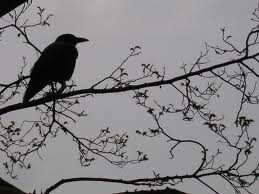
Three roses and a half-bottle of cognac – a fitting toast to the man who created a literary genre, contributed to the development of short stories as a literary form in American literature, and created macabre images that have spawned countless nightmares, influenced literature and served as the inspiration for . For sixty years, an unknown visitor (or perhaps, visitors), clothing positioned to obscure his identity, ventured out to Poe’s grave during the wee hours of the night to drink a toast and leave the flowers and liquor at his grave. Visitors from across the country journeyed to Baltimore to witness what had been an annual event from 1949 until January 19, 2010, when the  Poe Toaster failed to show. The Poe Toaster’s absence again this year leads one to wonder if the Toaster has passed away, taking the mystery of his identity with him forever.

How fitting that the so-called Poe Toaster (and his conspicuous absence) should be shrouded in mystery.  Edgar Allan Poe was known for his literary mysteries and created the detective fiction genre decades before Sir Arthur Conan Doyle created Sherlock Holmes.  His life clouded by tragedy and cut short at the age of forty under mysterious circumstances from a cause that has never been determined, I imagine the man whose stories of horror and mystery changed American literature would have richly enjoyed the aura of mystery surrounding a simple bottle of cognac and a few cut flowers laid on his grave.

I’ve always been fascinated by Poe’s works such as The Murders in the Rue Morgue and intrigued by the concept that a modern day pro-football team is named after a poetic work by a man who died long before football became a national obsession. Certainly it’s no coincidence Baltimore’s professional football team is dubbed the Ravens. Poe’s works have inspired hundreds of movie and television works (he even has a page on the Internet Movie Database – not bad for a man who died in 1849), and I have to admit to enjoying corny Vincent Price movies loosely based on Poe’s works – in some cases, it seems only the title was used.  Poe’s death was as mysterious as his works, and he’d certainly experienced tragedy and heartbreak. I won’t bombard you with details on Poe’s life. Suffice it to say his life might have provided fodder for a melodrama. Orphaned as a young boy when his actress mother died and his actor father abandoned his family, he was taken in by a family that raised him but never adopted him. Eventually disowned by his foster family, Poe foundered at college and in the Army, lost a brother to alcoholism, and buried his young wife after two years when she succumbed to tuberculosis. By the time of his death, he was believed to be drinking heavily and exhibiting erratic behavior. Despite these woes, Poe harnessed his literary genius to create an enduring legacy.

He wasn’t a conventionally handsome man, but there was definitely a dark, penetrating quality to his eyes. Poe wasn’t tall (Army records list his height as 5’8” ), and he was definitely not the man to bet on in a bar fight. But his moody genius would have made him quite intriguing. And possibly quite passionate.

So, here’s my question – would a man like Poe have made the cut as a romantic hero? While the vast majority of romance heroes are undisputed alpha males, the beta male offers an undeniably unique appeal. Edgar Allan Poe could be considered a beta male. Intelligent, prone to star-crossed romance, the type of man to use a pen rather than a sword – just the kind of man a strong woman could engage in a battle of wits and claim lasting love as his victory…intriguing possibilities, indeed. It’s fascinating to imagine what might have happened if Edgar Allan Poe had met a woman who was his intellectual equal. And equally fascinating to consider the plot possibilities of a hero with Poe’s moody romanticism. Do I feel a story forming?

Sunday, November 21, 2010

Elizabeth Van Lew - Spy in Petticoats


What comes to your mind when you hear the word spies? James Bond, gadgets, an eccentric Civil War-era spinster known as Crazy Bet. Yes, that’s right…a spinster known as Crazy Bet - Elizabeth Van Lew, a Richmond spinster known as Crazy Bet, used her eccentric behavior as a cover for her ingenious schemes, disarming the people she’s deceiving without ever using a weapon.  The daughter of a prominent Richmond businessman, the devoted abolitionist spent her inheritance buying and freeing slaves before the war. During the war, she spied for the Union, supplying information to Union generals; during her frequent visits to the Confederate prison in Richmond, Crazy Bet brought food and books for the imprisoned Federal soldiers and much desired treats for the guards while she gleaned information she could funnel to Union officers. Using her reputation as an eccentric to her best advantage, she adopted the touched persona of “Crazy Bet” to further avoid suspicion of her activities.

Crazy Bet hid in plain sight – the vocal abolitionist made no effort to hide her Union sympathies. Widely disliked for her views, she even became the subject of newspaper editorials condemning her humanitarian efforts, for they were aimed at Union prisoners rather than Confederate soldiers.  She and her mother, who joined with Elizabeth in her efforts, were held in disdain by their Richmond neighbors. Ironically, this served as a shield for her espionage. She was so open about her views that she was viewed as silly and hysterical, rather than the secretive, deceptive persona which one would expect a spy to adopt.

As time passed, she played up the eccentricities. She’d leave her hair in disarray, dress in her shabbiest clothes and bonnets, and mutter to herself while she walked through Richmond. Crazy Bet used her image as a harmless, touched spinster as the perfect disguise for her activities.

Elizabeth Van Lew’s methods were ingenious and varied.  A middle-aged spinster, she pried men with food rather than feminine wiles. She even charmed her way past the Confederate prison commander, Lieutenant David Todd, by learning of his fondness for buttermilk and gingerbread and bringing these to him in the prison. Lieutenant Todd, who was Mary Todd Lincoln’s half-brother, allowed Elizabeth to bring food, clothes and medicine to the prisoners. Often, this small gifts contained messages hidden in false bottoms and through clever codes. Her methods for funneling information to Union generals were equally clever. She even hollowed out eggs and used them to hide intelligence, which were then ferried to union officers by her household servants. General Grant considered her one of his most valuable sources of information. After the fall of Richmond, one of General Grant’s first visits was to the Van Lew home.

Elizabeth Van Lew’s story inspired the character of canny spymaster, “Crazy Betsy” Kincaid, in  Angel in My Arms, the story of Amanda Emerson, a beautiful Union spy and Captain Steve Dunham, the Union officer she recruits for a suicide mission. Steve Dunham’s facing a noose when sable-haired beauty Amanda Emerson and her crazy matron “aunt” engineer his escape from jail. There's a catch - Amanda needs him to break into Libby Prison to rescue a notorious double agent who may or may not be on the side of the Union.  He’s trading one noose for another, but Steve can’t resist her.  He’ll possess her love – if he lives long enough.

The rugged soldier she recruits for her plan looks more like a Viking warrior than a disciplined officer, but Amanda’s drawn to Steve’s courage and tenderness.  As  the danger  surrounding them thickens, every moment he’s with her jeopardizes their lives, but they discover a passionate love that’s worth the risk. 

Steve Dunham, the hero of Angel in My Arms, was introduced in an earlier novel, Destiny. When I wrote Destiny, I knew I’d have to give Steve his own love story. Throw in a gang of gun-runners who specialize in stolen military weapons, a nest of beautiful spies, a heroic Confederate officer whose ties with Steve go back to their Army service in the western territories, and a villain with a thirst for revenge, and you've got a plot that isn't your mother's Civil War romance. 

To learn more about Angel in My Arms and read an excerpt, please visit my website, www.victoriagrayromance.com and my blog, www.victoriagrayromance.blogspot.com . Angel in My Arms is now available in print and as an eBook from The Wild Rose Press, www.thewildrosepress.com .