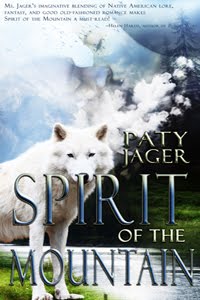
Last week I was informed my historical paranormal Spirit of the Mountain placed first in the paranormal category of the Lories Best Published Book Contest.
The funny part about it is I have never considered it a paranormal book. When my historical editor said it had to go to the fantasy line at Wild Rose Press I drug my feet kicking and screaming, "It isn't a paranormal."
I have Indian spirits who are shape shifters and integral characters in the book. This is what makes it fall under the category fantasy/paranormal. To me the spirit element is Native American. It is part of their culture and therefore is more historical than paranormal, but I've lost the argument many times.
Native Americans have long held the belief that animals carry spirits and those spirits were called upon to help with hunts, battles, and the day to day living required when living off the land. These spirits were depicted in drawings, ceremonies with elaborate costumes, and in their stories. Many myths/legends have the main characters of Coyote, bear, skunk, and weasel.
These tales were told around campfires at night. The stories had morals like our fairy tales and fables. Only the characters in the stories were rarely human and always they told of lessons. Sometimes lessons for children and sometimes lessons for adults. And always they told of human foibles through the animals.
Here is a Nez Perce tale:
Coyote was a wise man, and Fox was slow-witted. Coyote said to Fox, "Now we shall have to get up some scheme to procure food. You are slow-witted, just like your father. My father was not that way: he was wise. I have taken after my father."
They were in their camp; and Coyote said to Fox, "If you keep perfectly still and do not move, we shall get some food." Then Coyote began thus: "I wish that I and my friend could hear the sound of five packs of food falling at the door!" Then they heard five sounds: "tlitluk, tlitluk, tlitluk, tlitluk, tlitluk!" Coyote jumped up and ran out, and there he saw five packs lying at the door. He took the three largest ones for his share, and left the two smallest ones for Fox. The large packs that Coyote got were all dry meat without any fat, but the two little packs contained fine meat. In three days Coyote had eaten all his poor meat; while Fox had a great deal left, because his was so very rich. On the fourth morning Coyote was hungry, and kept his eye on Fox to see if he had eaten all his share. Now, Fox had eaten only one of his packs, so Coyote jumped over and took the other. Then he said to Fox, "You are a fine fellow never to divide up with your friend!"
Five times they repeated the magic act and got food, but the sixth time Coyote wanted to see who brought them the meat. So he said to Fox, "I am going to see the man who gives us meat." Fox replied, "You had better not try to do that, because this is the only way we can get food." But Coyote was determined to see. He stood at the door, and cut a peep-hole so that he could look out with one eye. Then he repeated the wish; and when the packs fell, he saw a man going up over the ridge who wore long hair in a wig. This man was Deer Tick. Coyote shouted after him, "Oh, you man with the wig, you go over the mountain!"
Think you they got food again from the man Coyote had shamed?
SEDUCED BY HISTORY AUGUST CONTEST: Seduced by History Blog is hosting a month-long contest in August. One winner will receive a ‘basketful of goodies.’ All you have to do is check in on each blog during the month, look for a contest question to answer and September 1-5, 2011 send in your answers to seducedbyhistoryblog@yahoo.com. For full details, read the information on the right or click the CONTEST page.
My question: What is the title of my book set among the Nez Perce?
Paty Jager
www.patyjager.net
www.patyjager.blogspot.com
References
Nez Perce Tales, By Herbert J. Spinden, 1907
From Blue Panther Keeper of Stories.
Tales of the Nez Perce by Donald M. Hines,
Ye Galleon Press; Fairfield, Washington, 1999
Showing posts with label Nez Perce. Show all posts
Wednesday, August 24, 2011
Thursday, February 24, 2011
Entertainment or History Lesson?

I'm currently writing the third book in my spirit trilogy series that is set among the Wallowa Lake Nez Perce. I've enjoyed the research about this band of the Nez Perce tribe, but with this book I have to also take into account the the army that is chasing them from their home to Canada where they hope to find freedom.
I've used the names of the officers in charge of each troop that skirmished with the Nez Perce on that flight, but I've made up the rest. And I've not given the places of the skirmishes names. Even though I've been religiously reading from four books about the trek using points of view from the Indians and the military, I'm keeping it as vague as I can so it doesn't read like a military text book or a history text book. I'm trying to keep the story entertaining while showing both sides. (okay I am a bit more sympathetic to the Nez Perce than the army)But I've found the hardest part is finding ways to have the hero and heroine (he's a cavalry officer and she's the Nez Perce spirit) be together and make it not seem unrealistic. But she's a spirit and can move around with the ease of a bald eagle(her spirit animal.
So my question is: Do you read historical romance for exact history or do you read for the romance and prefer the history to enhance the story rather than take it over?

Blurb for Spirit of the Mountain available now:
Wren, the daughter of a Nimiipuu chief, has been fated to save her people ever since her vision quest. When a warrior from the enemy Blackleg tribe asks for her hand in marriage to bring peace between the tribes, her world is torn apart.
Himiin is the spirit of the mountain, custodian to all creatures including the Nimiipuu. As a white wolf he listens to Wren’s secret fears and loses his heart to the mortal maiden. Respecting her people’s beliefs, he cannot prevent her leaving the mountain with the Blackleg warrior.
Blurb for Spirit of the Lake available May 2011:
Two generations after his brother became mortal, Wewukiye, the lake spirit, prevents a Nimiipuu maiden from drowning and becomes caught up in her sorrow and her heart. Her tribe ignores Dove's shameful accusations—a White man took her body, leaving her pregnant, and he plans to take their land.Wewukiye vows to care for her until she gives birth, to help her prove the White man is deceitful and restore her place in her tribe.
As they travel on their quest for justice, Dove reveals spiritual abilities yet unknown in her people, ensnaring Wewukiye’s respect and awe. But can love between a mortal and a spirit grow without consequences?
Paty Jager
www.patyjager.net
www.patyjager.blogspot.com
buy link:http://thewildrosepress.com/index.php?main_page=product_info&cPath=177_139&products_id=4170
Tuesday, August 24, 2010
Nez Perce Diet
Spirit of the Mountain, my August release is the first book of a trilogy about siblings who were made spirits by the Creator. While I made up the spirit world and their shape shifting and powers, the day to day living of the Nez Perce I tried to keep as factual as the information I could find.
At the time of my story the Nez Perce were nomadic, living off the land and its bounties. They had horses, but had yet to be introduced to cattle. Salmon, eel, and steelhead, were commodities of their region starting in May and early June and ran through the summer. They traveled first to the lower streams and worked their way to the high tributaries. The fish were caught, some eaten fresh others smoked and either stored for later use or used for trade. There was much rejoicing and ceremonies when the harvest was successful.

Kouse and other early roots were gathered during the spring while they were still along the lower streams fishing. They would meet at meadows in the high country once the snow had melted and gather roots. The women used sticks to dig the roots form the ground. They gave thanks to the Creator for growing the food that help sustain them through the winter months.
During the warm months they harvested wild plants, berries, pine nuts, and sunflower seeds. In the meadows they also gathered wild onion, carrots, and other plants. On the Forested mountainsides, they picked hawthorn, serviceberries, chokecherries, blackberries, and huckleberries.

Their diet also consisted of game animals and birds. They preserved what could not be eaten at once and had caches where they stored the preserved food until it was needed. So while they led a different life than the White man was used to, in reality they were not that much different in their methods of staying well fed.
Blurb for Spirit of the Mountain
Wren, the daughter of a Nimiipuu chief, has been fated to save her people ever since her vision quest. When a warrior from the enemy Blackleg tribe asks for her hand in marriage to bring peace between the tribes, her world is torn apart.
Himiin is the spirit of the mountain, custodian to all creatures including the Nimiipuu. As a white wolf he listens to Wren’s secret fears and loses his heart to the mortal maiden. Respecting her people’s beliefs, he cannot prevent her leaving the mountain with the Blackleg warrior.
When an evil spirit threatens Wren’s life, Himiin must leave the mountain to save her. But to leave the mountain means he’ll turn to smoke…
Excerpt
Wren’s eyes glistened with unshed tears. “My gift is to save The People. The weyekin who came to me in my vision quest said this.” She wrapped her arms around herself as if staving off a cold breeze.
Himiin hated that they argued when they should relish their time together. He moved to her, drawing her against his chest, embracing her. The shape of her body molded to his. Her curves pressed against him. Holding her this way flamed the need he’d tried to suppress.
He placed a hand under her chin, raising her face to his. The sorrow in her eyes tugged at his conscience. To make her leaving any harder was wrong. But having experienced her in his arms, he was grieved to let her go. Even for the sake of their people.
Her eyelids fluttered closed. Her pulse quickened under his fingers. Shrugging off the consequences, he lowered his lips to hers. They were softer than he imagined. Her breath hitched as he touched her intimately. Parting his lips, he touched her with his tongue, wanting to see if she tasted as sweet as she smelled.
Honey.
Paty Jager
www.patyjager.net
www.patyjager.blogspot.com
Buy Link: www.thewildrosepress.com
At the time of my story the Nez Perce were nomadic, living off the land and its bounties. They had horses, but had yet to be introduced to cattle. Salmon, eel, and steelhead, were commodities of their region starting in May and early June and ran through the summer. They traveled first to the lower streams and worked their way to the high tributaries. The fish were caught, some eaten fresh others smoked and either stored for later use or used for trade. There was much rejoicing and ceremonies when the harvest was successful.

Kouse and other early roots were gathered during the spring while they were still along the lower streams fishing. They would meet at meadows in the high country once the snow had melted and gather roots. The women used sticks to dig the roots form the ground. They gave thanks to the Creator for growing the food that help sustain them through the winter months.
During the warm months they harvested wild plants, berries, pine nuts, and sunflower seeds. In the meadows they also gathered wild onion, carrots, and other plants. On the Forested mountainsides, they picked hawthorn, serviceberries, chokecherries, blackberries, and huckleberries.

Their diet also consisted of game animals and birds. They preserved what could not be eaten at once and had caches where they stored the preserved food until it was needed. So while they led a different life than the White man was used to, in reality they were not that much different in their methods of staying well fed.
Blurb for Spirit of the Mountain
Wren, the daughter of a Nimiipuu chief, has been fated to save her people ever since her vision quest. When a warrior from the enemy Blackleg tribe asks for her hand in marriage to bring peace between the tribes, her world is torn apart.
Himiin is the spirit of the mountain, custodian to all creatures including the Nimiipuu. As a white wolf he listens to Wren’s secret fears and loses his heart to the mortal maiden. Respecting her people’s beliefs, he cannot prevent her leaving the mountain with the Blackleg warrior.
When an evil spirit threatens Wren’s life, Himiin must leave the mountain to save her. But to leave the mountain means he’ll turn to smoke…
Excerpt
Wren’s eyes glistened with unshed tears. “My gift is to save The People. The weyekin who came to me in my vision quest said this.” She wrapped her arms around herself as if staving off a cold breeze.
Himiin hated that they argued when they should relish their time together. He moved to her, drawing her against his chest, embracing her. The shape of her body molded to his. Her curves pressed against him. Holding her this way flamed the need he’d tried to suppress.
He placed a hand under her chin, raising her face to his. The sorrow in her eyes tugged at his conscience. To make her leaving any harder was wrong. But having experienced her in his arms, he was grieved to let her go. Even for the sake of their people.
Her eyelids fluttered closed. Her pulse quickened under his fingers. Shrugging off the consequences, he lowered his lips to hers. They were softer than he imagined. Her breath hitched as he touched her intimately. Parting his lips, he touched her with his tongue, wanting to see if she tasted as sweet as she smelled.
Honey.
Paty Jager
www.patyjager.net
www.patyjager.blogspot.com
Buy Link: www.thewildrosepress.com
Saturday, July 24, 2010
Myths, Fables- all teach lessons

My August release, Spirit of the Mountain is available already in print format at my publisher. The Wild Rose Press. It's my first attempt at a paranormal, but to me it feels like a historical. I did major research into the Nez Perce or Nimiipuu tribe to be able to write this story about the daughter of a chief who is asked for in marriage by a warrior of the Blackfeet(Blackleg) tribe which at the time of the story were according to the words of a current Nimiipuu "considered the same as how you considered the Huns". I used this fear and hatred throughout the story when the heroine is talking and thinking about living with the Blackleg(the name the Nimiipuu called the Blackfeet).
I not only researched books on their day to day living conditions, their society, and their beliefs, I also read as much as I could in their own words. Myths and legends books and any snippet I could get that was in English but translated directly from their words. It helped me to get a feel for their speaking and cadence to their dialogue.
Here is a Nimiipuu story that I copied from the Nez Perce loop I'm on. As you can see by reading the story all of the stories handed down through the generations were like our fables. They taught a lesson.

Nez Perce boy legend
A long time ago there lived in our Blue Mountains a boy who was an only child. His parents had pampered and spoiled him until he was quite selfish and disagreeable.
His parents died and he was obliged to live with the rest of the tribe as an orphan. Because of his selfishness he was not well liked and the other children did not like to play with him. Some of the children learned that the camp was to be moved and made plans to get rid of the spoiled boy.
No one told him that they were moving and that morning they took him out to the high cattails to play hide-and-seek. They would hide and then call, "Who! Who!" Part of the time the boy was following his own echo. The children slipped away and hurried back to the camp in time to go.
The boy wandered about listening to his own echo for some time before he decided that the others had left. When he found his way back to camp it was deserted.
He was hungry and by rummaging about he found some roots that had been left. Still hungry, he decided to try some fishing. With a thorn on an improvised string he made from fibers and hair left at the camp, he placed a worm on the thorn and fished. Thus he secured fish.
Not wishing to eat it raw, his mind turned to fire, and investigation proved that someone had banked a bed of coals and he soon had a camp fire going.
Night was approaching. Where would he sleep? At last he remembered the little stone and mud igloo down by the stream where the people had taken their sweat baths. He crawled into the igloo and slept quite comfortably.
In the morning, he decided to try fishing, but this time a strange thing happened. When he felt something on his line he pulled steady and hard. Slowly it came, but it was not a fish. It was a boat loaded with many provisions and an extremely homely old lady. The old lady spoke to him, "Don't be afraid little boy, I will not hurt you. I am your Grandmother Experience. I have come to help you."
Grandmother Experience lived with him, after that and helped him do many things - make bows and arrows to kill game, gather food, build shelters, and many other things.
Time went on and the boy lived with the grandmother and grew up big and strong, but wondered where his people were. He commenced traveling about in hopes of finding them. One day he did find them and they marveled at the change he had undergone. He was no longer a spoiled selfish boy. Grandmother Experience had made a self-reliant, pleasant young man of him.
If you'd like to read an excerpt of my book Spirit of the Mountain you can visit my website: www.patyjager.net and click on paranormal. While you're there enter my website contest.
I'll be blogging for six days straight at Seriously Reviewed starting tomorrow, Sunday July 25th. Come on by and read about my hero and heroines from my last two releases. The last day I’m giving away a pdf of Doctor in Petticoats my historical western that released in June. And starting on Sunday August 8th I'm doing a six day blog tour with a contest. Check out my blog to learn more.
Wednesday, February 24, 2010
Gathering Food the Nimiipuu Way

I think we've all heard Native Americans (Indians) thought highly of the earth and believed all its creatures were gifts. The Nez Perce were especially grateful to the bountiful fish and wildlife in their territories as well as the plants which they harvested to round out their diets.
The men of the Nez Perce built weirs and fished, but the women maintain the weirs and processed the fish. Drying the salmon and trout over fires on racks made of limbs or on sticks stuck in the ground and bent over the fire. In the heat of the summer the fish would also be dried on racks in the hot summer sun and soup was made from the heads.
The men hunted large game animals and could be gone for up to a year or more when they traveled into the plains for buffalo, returning with huge amounts of dried buffalo and hides. The women traveled with them on theses hunts to prepared the meat for transporting back to their villages.

Nothing was wasted of an animal, the meat was cooked, smoked, and dried. The tongue and liver were eaten raw and ears were used as seasoning in soups. The fat was used to cook fry bread and bear meat was barbecued. Pemmican was made from the dried meat. It was broke into pieces that would fit in a mortar and pounded adding intestines and meat fat. This was a staple when traveling. They also made a pemmican of dried salmon and berries which the Nez Perce men carried wrapped in leaves in the bottom of their quivers. This was a nutritious easy-to-carry food when they were hunting.
The women were in charge of gathering roots, herbs, berries, and killing small game. They used sticks called tu`k`es or digging sticks to extract the roots from the earth. In some instances they would span out across valleys teeming with the camas, bitterroot, and kous.
Camas roots were dug from June to September depending on the elevation where they grew. They were gathered in wet upland meadows. Weippe Meadows, Camas Prairie, Palouse Prairie and Grande Ronde Valley. They were baked and steamed. Cooking pits or large holes were dug before the harvest. After the roots were dug they would lay out hot red rocks in the hole, sprinkle with water, put dirt over the rocks, then fresh alder leaves, and a layer of meadow grass. Then the camas. The roots were covered with alder leaves, meadow grass, sprinkled with water and dirt, then a fire built on top and they cooked for three days. The roots were then eaten whole, pounded into flour, or tossed in soup.
Kous was dug from April to July. It was found in dry rocky soil and is similar in shape to a carrot. It was eaten either fresh or dry. Thy peeled off the skin and sun dried it. Then they would pound it into a oatmeal or cornmeal and serve as a cooked mush or make a ball and sun dry it or make a long bread called o`ppah that was smoked.

Bitterroot was dug in Nespelem area in August. It resembles a crocus with pink flowers. The yellow root looks like spaghetti and must be peeled. This root wasn't ground up, it was served like a vegetable. They mostly traded for it with the Plateau Indians. Women ate bitterroot or made tea to increase their milk flow after childbirth.
Wild onions were the first root of spring, dug in April. They have a fern-like top and the bulb is the size of a walnut. They also dug wild carrot in May. It grows in clusters in damp or wet areas. The blossom is two feet high and smells like the food. It is a finger sized food with a brown jacket and white meat. Sweet and rich flavor and may be eaten raw. They also dried and ground it for porridge and boiled it fresh like a potato.Or preserved the root by drying and grinding it into flour for loaves that were smoked and stored.
They stone boiled soup in willow baskets. Putting a rock that has been heating in a fire into the basket. They stored food in baskets and hide bags as well as caches or pits dug in the ground where large amounts of food would be stored for the whole band. These could be any where along their well traveled routes or hidden.
That is some more of the information I've gleaned while working on my paranormal trilogy set among the Nez Perce.
www.patyjager.net
www.patyjager.blogspot.com
Sources: Nez Perce Women in Transition, 1877-1990, Caroline James
Nee Me Poo- Allen p> Slickpoo Sr. and Deward E. Walker, Jr.
Photos: http://www.firstpeople.us
Sunday, January 24, 2010
Nez Perce Indians and Pregnancy

I'm working on the second book of a trilogy set among the Nez Perce Indians of Idaho, NE Oregon, and SE Washington. In this book the heroine is pregnant, so I've been spending hours reading books about the Nez Perce customs and social living aspects to learn all I can about pregnancy and child birth.
The Nez Perce women had specific jobs. They gathered roots, berries and herbs as well as the firewood. It was their job to keep the fire going all night during the winter months. They were the cooks, the ones who dried and stored the meat, fish, berries and roots. Tanned the hides, made the clothing, wove baskets and constructed the dwellings. They did everything needed to sustain a family other than hunt, prepare weapons, and fight. If need be, they could hunt for smaller animals, fight, and take care of weapons though it was not one of their jobs.
During battles women provided fresh horses, food, and water for the warriors, tended the wounded, warned others of danger, directed children and the old people where to hide and how to leave when their encampments were attacked. If a husband was shot they could pick up his gun and fight. They also cooked and gathered wood during attacks, keeping the children, old people, and warriors fed during the attacks and battles.

Pregnant women still did most of the chores right up until the moment they started labor. Some would have miscarriages from long periods of riding horses in the last months of pregnancy. Usually during campaigns of fighting.
If a woman was pregnant they believed their man would have bad luck hunting. She was also not allowed to see any part of a kill—blood, skinning. They feared her child would be born deformed. They also didn't touch, view, or ridicule any deformed animals or humans, fearing it would cause their child the same misfortune. They didn't tie knots or do things symbolic of obstructing the birth.
A wide strip of buckskin was tied around their bellies. This was believed to protect the child. After the birth, this strip was burned or buried, giving the child a healthy, strong body. They did everything to keep the baby safe. The Nez Perce wanted to build a large strong tribe.
.jpg)
When a woman started labor she was isolated in a small dwelling with either an older family member or a mid-wife. If there were complications the Ti-wet (medicine man) was called in. The dwelling had a hole dug in the middle of the structure. The blood and after birth were put in this hole and buried. The umbilical cord was kept in a small leather pouch attached to the cradleboard. It is believed to be bad luck to destroy such an intimate part of the baby.
The cradle board is made by a relative. The baby is transported and tended in the board until he is ready to walk. Children were breast fed for several years. This was one of their ways to contribute to birth control. Other ways were with herbs.
This is just a minuscule picture of what I've learned and hope to incorporate into my paranormal historical book.
Sources: Nez Perce Women in Transition, 1877-1990- Caroline James; Nee Me Poo – Allen P. Slickpoo Sr. and Deward E. Walker Jr.
Photos: First Americans
Paty Jager
www.patyjager.blogspot.com
www.patyjager.net
Subscribe to:
Posts (Atom)