Historical Conflicts that You Don't Find in Contemporaries
This topic came up when a friend of mine used the term illegitimate and her teenage nieces asked what it meant. So obviously being illegitimate wouldn't be a problem of conflict in a contemporary story.
While today illegitimacy doesn't carry much weight, it meant a great deal in the Middle Ages.
 We've all read romances where the hero is illegitimate. Today the term bastard is a pejorative about a man's character. But in the Middle Ages it was a description of a man's birth. William the Conqueror, later William I of England, as a boy was known as William the Bastard of Normandy, as his parents weren't married. His father did, however, acknowledge William and name him as his heir as he had no other son.
If you want to add conflict to your story by making the hero illegitimate, then realize how significant that stigma of illegitimacy could be. This is why bastard (description of birth, not character) son's either acknowledged or unacknowledged are always good for conflict, especially in a Medieval.

In the Middle Ages upper class and noble marriages were a business arrangement between two families for political, social or economic reason. (que the song What's Love Got To Do With It). This one of the reasons that a marriage of convenience works so well in Medievals, as often the bride and/or groom didn't choose his partner, but they were chosen for them.
And to preserve these political, social or economic ties, inheritance was important. Very important when talking about the landed aristocracy. Doubly true in countries where primogenitor, where to keep the land intact, the oldest son inherited it all.
So direct descent, or legitimacy was necessary to inherit. And the problem?
Now everyone knows who a baby's mother is (why there was always observers when a queen gave birth). But how do you know who the baby's father is? You have to take the mother's word for it. That's why a woman's virginity was the dowry that she brought her husband.
This is the value of a virtuous woman for a wife. A man knows the son who will inherit his property is his. You can see this Regency area novels, where a wife, if she had given her husband and heir and a spare (two sons), then she might take a lover if she is discreet.
Notice that most of this deals with male illegitimacy, not female. Being an illegitimate female was a minor consideration to that of a male, as most inheritance was thought the male line. Although, it happens in novels, illegitimate sons were rarely 'legitimized', though often acknowledged, especially if they turned out to be, or could be used as an asset to the family. 
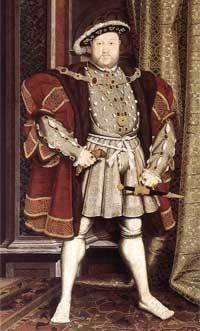
Henry VIII, while in desperate need for a son, only acknowledged Henry FitzRoy, making him the Duke of Richmond and Somerset.
This was a special problem for reigning monarchs. Remember this was the age of the diving right of kings. Scot kings who ruled Scotland by the divine right were God's stewards of Scotland. The 'd' in steward became a 't' (say both and see how similar) and the old spelling of the royal house of Scotland was Stewart. Since kings ruled by the grace of God, it was necessary the legitimate heir inherit. If a non-qualified person, an illegitimate person (one without the grace of God behind him), it was an invitation to disaster for the entire country. There would be invasions, famine or plague to show the wrath of God, who no longer protected the king and country.
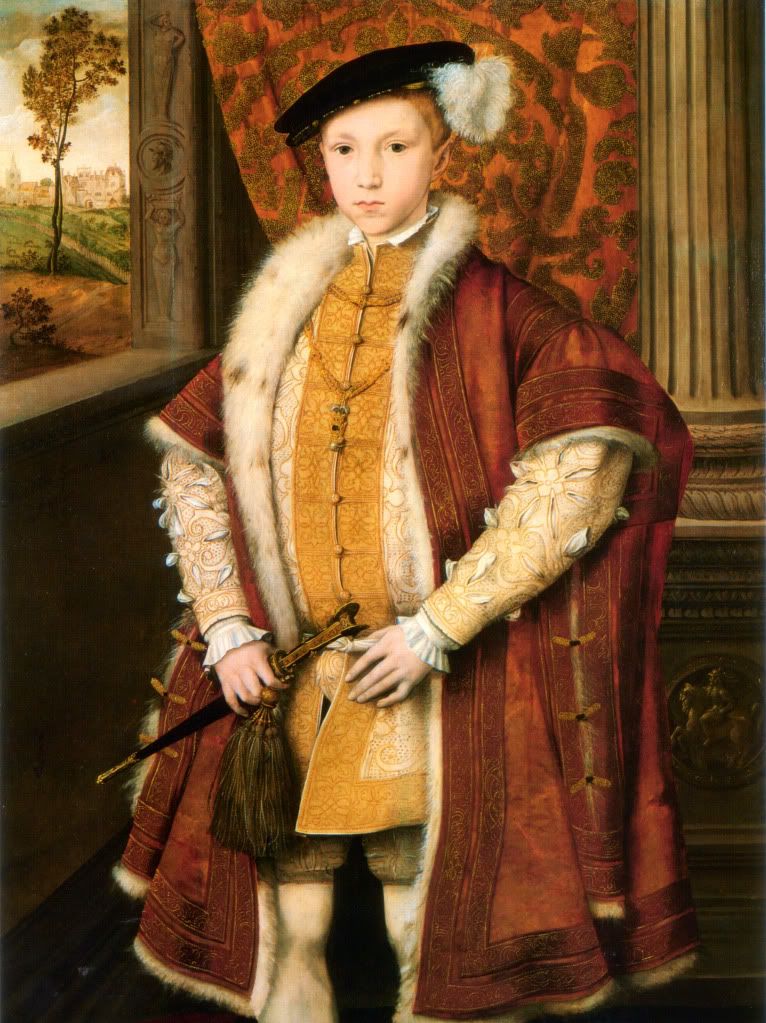 A good example of how a country must have a legitimate rule can be seen at the death of Edward VI, the son of Henry VIII and Jane Seymour in 1553. By this time the Protestant Reformation had a firm hold in England, and the majority of the people were Protestant. However, the oldest daughter of Henry VIII was Mary Tudor, a devout Catholic.
 If she became queen it was obvious that she wold try to reconcile the country to the Catholic Church. Thus causing a repeat of the unrest caused by Henry VIII's break with the Pope. There was an attempt to supplant Mary with Lady Jane Grey, a Protestant. But even in the face of more religious turmoil, the overwhelming support for Mary, as the legitimate heir, put her on the throne of England.
Even in the next century, when Oliver Cromwell died the best the Commonwealth could come up with for continuing ruling was Cromwell's son, Richard - an implicit legitimacy in a ruler. And of course this didn't work out, and Charles II was recalled from exile an declared king with the Restoration, thus proving that legitimacy was very important.
PS - see my previous post about love/hate technology. It took me three times to get this blog posted.
So, if you're considering a bastard for your hero, I hope this helps.


