Where Romance and History Meet - www.heartsthroughhistory.com/

Pages

Thursday, May 13, 2010

Let's Eat!

It’s said that great minds think alike. So I wasn’t too surprised to see that a previous Seduced by History talked about food, which is what I was planning to blog about. So, if you’re still hungry for information, here goes.

One of the reference books I list when I teach is Food In History by Reay Tannahill. This book covers the who ate what when and where. But really the reason I mention it is twofold. Since we write historical, the heroine is the one doing the cooking, and since people eat, the writer often has scenes where people gather together and have a meal. And, two, if you’re going to say specifically what your historical characters are eating, you should get it right.


A basic history of food. Early man got his food by hunting, fishing and gathering. Then with the Neolithic Revolution came the domestication of plants and animals. Which opened up a whole new world of food.


While bread (made from any number of grains) is considered the ‘staff of life’ as the basic food stuff, I have read that some anthropologist think that the cultivation of grain began, not so much for making bread, but for making beer or ale.
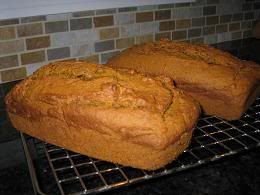

They base this on the fact that technologically, making beer is an easier process than making bread, especially leavened bread, and both allow the saving and consumption of calories.


Fun fact: With the Norman Conquest of England the French speaking Normans became the upper class and the local Anglo-Saxons became the commoners. As the English language developed from the blending of the two over time, Anglo-Saxon words described the animals. Cow, sheep, pig are Anglo-Saxon based words. But when the food got to the table, beef, mutton an pork are French based words.


Today we’re used to getting practically any food at any time of year. Obviously this wasn’t always so. First let’s talk location.
There is a difference between Old World and New World native crops. If you’re writing before 1492 and the beginnings of European exploration of the New World, your Medieval people can’t be eating food found in the New World. The New World added corn, beans, tomatoes, potatoes and peppers to the menu.

And let’s hear it for Marco Polo who gets credit for bringing back to Italy the noodles he found while visiting the Far East.

And please consider the season when you historical characters are eating. There are the delicates of spring with strawberries, and bounty of summer and the work in the fall to preserve as much as you can for winter. Without commercial refrigeration there was drying and salting.
Making cheese is a way of preserving the nutrients in milk. In temperate climates, the root cellar or the springhouse (or even a cave) can be place to keep food.

Family Story: My great grandmother didn’t like soft butter, so in the summer she stored the butter in a bucket let down in the well. Every meal my grandmother had to go and bring up the butter and carried it back to the house under a damp rhubarb leaf. She also remembered the hog butchering in the fall.

The reason all this food stuff occurred to me is that I’ve just started teaching an on-line class. Another Time, Another Place is all about transporting the reader, dealing with research and how to incorporate the information into you work. It’s not too late to sign up.
And for me, think I’ll go get something to eat.

Wednesday, May 12, 2010

Food Preparation in the 1800's--It wasn't for Sissies!

After many years of wanting a child, a good friend of mine was able to adopt a baby. She wants the boy to understand and appreciate his cultural heritage (Korean) and so she spent time learning where to purchase and how to cook some of his native meals. In the end, she realized that the women spent nearly ¾ of their day in the preparation of their food.

As I looked through cookbooks of food preparation in the 1800s, it seems that women of the American frontier did likewise. Here are a few tidbits I gathered...
~ ~ ~ ~ ~ ~

Butter

"The quality of butter depends very much upon the kind of cows. Those who give a great deal of milk, are usually small and thin. Every cow should have a tea-cup full of salt each week, and must be well fed. Green cornstalks and carrots are excellent for cows. Turnips, cabbage, and parsnips spoil the milk.

Two particulars are indispensable to success in making a good butter; the first is, that the churning be frequent so that the cream will not grow bitter, or sour; and the second is cleanliness in all implements and processes connected with it.

In hot weather it is important to keep the milk, cream, and butter as cool as possible. For this purpose, those who have no ice-house or very cool milk-room, hang their cream down a well.

After the weather gets cold, the cream rises more perfectly after allowing the milk to stand say ten or eleven hours, to set it over a furnace a while till it is warmed through, but not heated hot enough to boil. Then take it back, let it stand eleven hours longer and skim it. This secures more, and better cream.

Do not use the hand in working over the butter, as it injures it so much that a higher price is often paid for butter made without using the hand. A wooden spade made for the purpose is the proper article for working over butter." (Miss Beecher’s Domestic Receipt-Book, 1856)

Eggs

Yellow or brownish colored eggs are mostly produced by hens of Southern breed, and the white alabaster egg, by Northern breeds. (Home Studies, 1856)

To tell good from bad; put eggs in water in a vessel with a smooth level bottom, but reject those which stand on end as bad. If eggs gurgle when shaken gently, they are “totally depraved.” (Buckeye Cookery and Practical Housekeeping, 1877)

Eggs were preserved by several methods.

In lime-water ~ One pint of coarse salt, and one pint of unslacked lime, to a pailful of water. If there be too much lime, it will eat the shells from the eggs; and if there be a single egg cracked, it will spoil the whole. The yolk becomes slightly red, but I have seen eggs, thus kept, perfectly sweet and fresh at the end of three years. (The American Frugal Housewife, 1832)

Rubbed with fresh butter or dipped in liquid mutton-suet or beef suet, hung in a net, and daily turned upside down. (Home Studies, 1856)

Eggs are preserved longer by packing them close, standing them on their small ends. (Miss Beechers’s Domestic Receipt-Book, 1856)

Flour

Good flour adheres to the hand, and, when pressed, shows the imprint of the lines of the skin. Its tint is cream white. Never buy that which has a blue-white tinge. Poor flour is not adhesive, can be blown and easily, and sometimes has a dingy look, as though mixed with ashes. (Buckeye Cookery and Practical Housekeeping, 1877)

It is estimated that one barrel of flour will last one person one year, which gives a rule of proportion by which to buy. (The Boston Cook Book, 1884)

Flour…of old mixed with plaster of Paris, ground bones, and potato-starch—thanks to the cheapening of pure materials, has come to content itself with alum only. (The New Cyclopaedia of Domestic Economy, 1872)

~ ~ ~ ~ ~ ~

A girl learned as she helped at her mother’s side. A missed step, an unclean utensil, could easily end up spoiling the food and undoing hours of work. I supposed it could undo even more time if one takes into account the feeding and care of the cow or the hens. The more I learn of how difficult life was for women on the frontier, the more I appreciate my modern conveniences—especially the refrigerator and the supermarket!

Monday, May 10, 2010

Research left on the cutting room floor


Thanks to all of you for having me here today. I kicked off this blog tour for my May release, HIS BORDER BRIDE by “Chatting with Anna Katherine.” The post was called “You had to research what?” and it had such a good response, I thought I would share something similar with this group.
Because yes, I AM seduced by history and I know you are, too!
If you want to see Part I, go to http://annakathrynlanier.blogspot.com/ and scroll down to April 26. Sorry! Contest is over, but I'll give a copy of HIS BORDER BRIDE to a commenter to today's post.
As any writer knows, you must research far more than dates, the names of kings, and political and military history. In fact, those are usually the easiest things to find. But I use real people and events in my books, so I need a level of detail an ordinary history text doesn’t offer. So for this post, I’m focusing on the research I did around real characters and events. And this time, I’ll give you a peek at what I had to leave out because it didn’t contribute to my story.
The childhood of Lord Douglas. The Scottish border lord, William Douglas, later the first earl of Douglas (though not during my story!) was one of the most powerful men of his time. He was a secondary character I envisioned as rough and ready, and slightly uncouth, so I crafted a couple of scenes under that assumption. He did, after all, murder his uncle to assume leadership of the family. That didn’t seem the most civilized behavior.
Then, I discovered he had been fostered in France as a child. In fact, he was quite the Francophile, even fighting for the French at Poitiers when they were defeated, resoundingly, by the English. This called for a major rewrite of scenes and dialog and shifted his motivations and the conflict he represented for my heroine, who was also a Francophile.
What didn’t get in the book. The story goes that Douglas was responsible for the French defeat at Poitiers because he was the one who told them to fight on foot, a strategy that doomed them. Dozens of French nobles were killed or captured. Douglas was not. The chronicler writes that “when he perceived that the French were hopelessly defeated he made off as fast as he could; for so much did he dread being taken by the English…"
Edward III’s military campaigns. There’s no battle in my book, but my hero was conceived during Edward’s early Scottish campaign, accompanied Edward on the French campaign, and the book begins during the second Scottish campaign. The latter was so destructive that the Scots labeled it “Burnt Candlemas.” I needed to know what my hero had been through, where he was when the story opened, how long it would take him to get to the heroine’s lands, how the fighting continued for her father and the others on the Scots side…all that stuff. I discovered, for example, that Edward III brought falcons with him when he invaded France in 1356, a fact that tied in with the use of falconry as a key element in my story.
What didn’t get into the book. Edward III was very nearly captured during the Burnt Candlemas. William Douglas, yes, same as above, had planned an ambush, but at the last minute, the king took a small retinue for an unplanned meeting with Henry of Lancaster.
Where John of Eltham was buried and what his tomb looked like. 20 years after his death. This real life character was father to my fictional hero. There’s a pivotal scene in the book in which he stands before his father’s tomb. It’s key to his emotional climax and I wanted to see what he saw. Fortunately, out of print, out of copyright books and images exist, so I was even able to describe the sculpture of his father’s face. (That's a picture on the right. But if you go to Westminster Abbey today, it won't look like that. The canopy has since been destroyed.)
What didn’t get into the book. The tomb has a full effigy of John of Eltham, the last son of a king of England to die an earl, and he is wearing the earliest known example of a ducal coronet.
So, what about you? As writers, have you ever chased an obscure fact? And as readers, what details seem to really pull you into the world? I’ll give a copy of HIS BORDER BRIDE to one lucky commenter.
Thanks again for having me here. You can read an excerpt from HIS BORDER BRIDE, and more about the story, on my website, http://www.blythegifford.com/. I also love to have visitors at www.facebook.com/BlytheGifford.

Cover Art used by arrangement with Harlequin Enterprises Limited. All rights reserved. ®and TM are trademarks of Harlequin Enterprises Limited and/or its affiliated companies, used under license. Copyright 2010

Saturday, May 8, 2010

Grammariffic!

Seduced By History recently conducted a poll, asking if those who read our blog were readers, writers, or both. The results? Readers, 24%, writers 6%, and readers/writers a whopping 61%.  And since writing is as much technical as it is creative, I'd like to talk about a few of my favorite grammar pet peeves.

It was my now 13-year-old daughter who coined the term "grammariffic" several years ago. And okay, maybe I'm a little obsessive about correcting people's grammar. I was in labor - with this same daughter - when my husband told me, "You're doing good." Between contractions, I snapped, "It's you're doing well!"

Perhaps my obsession is a result of my late father, who was largely self-educated. If there was a word he didn't understand, he'd consult his pride and joy, the Funk & Wagnall's dictionary. That dictionary now has pride of place on my desk.

There are a few grammar mistakes that really bother me when I either read them or hear them spoken. "If I would have known..." instead of "If I'd known." "It wasn't that good of a grade," instead of "It wasn't that good a grade." "As best as he can" rather than "As best he can."

Of course, when you're talking, it's easier to overlook these mistakes than if you're reading them. A friend I knew from school asked me to read a short story she'd written. The plot was interesting, and the characters were believable. But the grammar ... well, let's say it needed work.

Things like effect instead of affect, wood instead of would, there, their and they're. I gave an honest critique, telling what I liked and didn't like, then suggested she buy a good grammar handbook!

How about you? Are there grammar mistakes that drive you crazy? That resonate like fingernails on a chalkboard?

Tuesday, May 4, 2010

Possible Link Between Accuracy of Facts and 4 Star RT Book Review


In the May issue of RT Book Reviews is a 4 Star rating and book review for Northern Roses and Southern Belles. I'm thrilled that this anthology of Civil War stories and one post Civil War story found recognition not only by a reviewer for RT Book Reviews, but also other reviewers.

How did this happen? Was it pure luck, or did we six authors bring it about by writing the best stories we could that incorporated the most accurate facts we found? I believe it's the latter rather than pure luck. We researched incidents surrounding the Civil War and chose our external plots according to what interested each of us the most. Discovering all the facts followed next as we each studied our selected bit of history.

We gathered information and facts from various sources. Even though a couple of us chose stories that came from our family history, we researched the historical incidents involved. I used the Handbook of Texas Online where I found articles about people who had been involved in the history surrounding my story, "Are You Going to the Dance?" In addition, I used information from notes I had taken years ago from a couple of library books about intriguing incidents in Texas after the Civil War.

We wrote down our ideas and ran them by each other. Satisfied we were on the right track, we wrote rough drafts. After another round of critiques we fleshed out our stories. More critiquing followed until we each felt we'd written the best story we could.

In addition to our research and careful writing, we had an excellent editor from The Wild Rose Press who helped us fine tune our stories. The project took a lot of hard work from all of us to achieve the great results we've enjoyed. We crafted romance stories based on historical facts. Not only can our readers enjoy reading the romances, but they can learn a bit of history at the same time. We're confident we wrote romances that entertain while being historically accurate. For readers of historical romance, isn't that what makes a great story?

Northern Roses and Southern Belles, by Susan Macatee, Mary Ann Webber, Jeanmarie Hamilton, Jennifer Ross, Isabel Roman, and Caroline Clemmons, can be found at The Wild Rose Press, Amazon.com, and various other booksellers online.

Jeanmarie Hamilton
www.JeanmarieHamilton.com

Monday, May 3, 2010

We Have A Winner!

We have a winner in our April Gift Basket contest! She's Carol L., who posted on our April 8th blog, "A Little Musical Inspiration." Congratulations, Carol!

Please contact me at cwrites2003@yahoo.com with your snail mail addy, and we'll get your prizes to you ASAP!

Sunday, May 2, 2010

A Trip Back In Time: Skye Museum of Island Life

When I visited Scotland, my stop at the wonderful Skye Museum of Island Life in Kilmuir was one of the most interesting and memorable. It is located close to the northern tip of the Trotternish peninsula. It is a beautiful and remote area. To get here from Portree (the capital of Skye) you must travel about 18 miles, and most of it on single lane road. See map below. (I borrowed this from their website so you could see the exact location.)
This outdoor museum is like a trip back in time to see how residents of Isle of Skye lived a hundred or more years ago. The seven stone cottages are the genuine articles and their thatch roofs are fascinating. Since Skye is almost devoid of trees, stone was the only material available in early days for building. Some of the walls are three feet thick. Timber had to be used for the rafters, of course, and the residents got this from the ocean when (wooden) shipwrecks washed up on shore. The thatch is a locally grown reed, and beneath this is sod or turf.This (above) is called the The Old Croft House with mill stones sitting outside. It is the largest building on this site. It contains three rooms, the most important of which is the kitchen where the fire was kept in the fireplace year round. The family gathered here to stay warm, to eat, etc. The fireplace used in the 1800s was an improvement and replaced the earlier central hearth which caused the whole house to be smoky. This house also contains a children’s bedroom with two box-beds, and a smaller parents’ bedroom. The Old Croft House was built at the beginning of the 1800s and was a real family home for about 150 years.

Also included here is a barn containing old farm equipment to be used with horses, a smithy (above) showing how farming implements and other things like horseshoes were made. If I'm remembering correctly, we were not allowed to take photos inside the buildings. But if you visit the website, you will see the inside of the smithy on the front page. The Ceilidh House is another of the buildings. The Ceilidh (pronounced kei-li) House was where the people of the community would gather in the evenings to entertain themselves, especially during the long dark winters. (Since Skye is so far north, their winter nights are longer than ours here in most of the US.) They would tell stories, play music, sing, dance and socialize. The Ceilidh House now contains a large amount of historical material about Isle of Skye.

There is also a Weaver’s Cottage (above). Weavers made all the clothing worn by the community as well as blankets, curtains, or anything of fabric. The cloth was mostly wool and maybe some linen.

Here is a lovely view of the Western Isles or Outer Hebrides across the Minch.

One interesting side note, over 50% of the population of Kilmuir still speaks Scottish Gaelic.


Just to show you the contrast, here is a modern community on Skye.

I hope you enjoyed this wee visit to Isle of Skye.

Nicole

www.nicolenorth.com