Where Romance and History Meet - www.heartsthroughhistory.com/

Pages

Showing posts with label cavalry. Show all posts

Monday, January 24, 2011

The Indian Wars Cavalry


Doing research for the third book in my spirit trilogy I had to do research on the plains cavalry. This was the mounted army used to curtail Indian uprisings and make sure there was safe passage for the people populating the west.

After the Civil War Southern cavalry officers were demoted to privates. There was feeling that if they were allowed to remain officers they could become in control of the military. So many left the service rather than be demoted. After the war many of the soldiers went back to civilian life, leaving the cavalry shorthanded.

The years following the war most recruits were either illiterate or spoke a foreign language, causing problems when it came to training. Officers, who were graduates of West Point or promoted during the Civil War and had sufficient training and experience in fighting, found themselves teaching ragtag groups how to ride horses and fire a rifle.
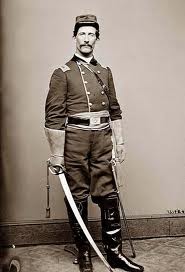
The plains cavalry weren't the sophisticated and well oiled machine the movies make them out to be. A good part of the enlisted men were criminals who chose enlisting to going to jail.

Not all forts were as large and accommodating as we see in movies either. Most were small complexes of buildings for housing, cooking and eating, and a supply or trade shop along with a stable and farrier. When the soldiers weren't working on their fighting they were the upkeep and builders of the forts.

During most of the Indian Wars period, the basic enlisted man's salary was $13 a month. Low pay, combined with boredom, and the fact many were there due to paying a debt to society for crimes they committed there was a high desertion rate.

Food at the frontier forts wasn't of good quality. The enlisted man's menu consisted of hash, stew, hardtack, salt, vinegar and molasses. Scurvy was a common disease among the men due to the lack of fresh fruits and vegetables.

I discovered with my research the cavalry life was not glamorous and you had to have either wanted to stay away from your family really bad or had no other place to go to want to stay in the mundane life that could kill you just as easy from fraternizing with the local women as it could from a bullet or arrow.

www.patyjager.net
www.patyjager.blogspot.com

Friday, May 21, 2010

Call In the Cavalry!

Call in the cavalry! My new release, Destiny, features a cavalry officer tasked with a most unusual mission. In honor of Major Jack Travis, the by-the-book soldier who takes on a highly dangerous, extremely unorthodox mission, I decided to present a look at the cavalry and its many roles in the Civil War.

The U.S. Cavalry was a branch of Army service known for their skill as horseman and soldiers. These forces played many important roles in warfare throughout this country’s history. During the Civil War, cavalry soldiers on both sides of the conflict assumed key roles on and off the battlefield.

In earlier conflicts, cavalry soldiers were used for offensive actions. Massive cavalry charges were used to overwhelm infantry formations. As weapons became more accurate at larger ranges, the effectiveness of cavalry charges diminished. A horse and rider were easy targets for rifles accurate to 300 yards or more. The cavalry’s role in offensive actions shifted to cavalry against cavalry offenses rather than cavalry against infantry. This type of cavalry against cavalry action occurred during the first Battle of Bull Run.

Cavalry soldiers were often tasked with defensive actions to delay offensive attacks and to carry out long-distance raids. These raids often brought fame to those who led the operations. Confederate General J. E .B. Stuart’s raids against the Union Army of the Potomac in 1862 during the Peninsula Campaign and the Maryland Campaign brought him renown in the South, while Union General Benjamin Grierson’s long-range raid in Mississippi offered strategic support to Grant’s army in Vicksburg.

During the Civil War, cavalry soldiers assumed a key role in reconnaissance and counter-reconnaissance. With their mobility and speed, the cavalry served as the eyes and ears of Union and Confederate generals. They were also utilized to raid enemy lines of communication, supply storehouses, railroads, and to conduct guerilla warfare.

The hero of my new release, Destiny, is a cavalry officer tasked with an extremely unusual mission: protect the runaway daughter of a Northern senator by beating her would-be abductors to the punch. Major Jack Travis is a skilled horseman, a crack shot, and an experienced raider who’s none too happy about his new roles: captor and bodyguard. He should be in the field, not stealing a runaway bride from a train to keep her out of the hands of her father’s enemies. The by-the-book officer finds his captive is anything but the plain, mousy woman he’d been told to expect. Emma Davenport is beautiful, intelligent, feisty – and forbidden. He’ll risk his neck to protect her, but how can he protect her from himself?

The real-life soldiers of the United States Cavalry were my inspiration for Destiny’s hero and his partner, Steve Dunham – who finds his own heart on the line in the sequel to Destiny, Angel in My Arms, due out later this year from The Wild Rose Press. Cavalry officers fought valiantly, provided crucial intelligence, and were often viewed as a first line of defense against opposing forces…all of this, while exposed to enemy fire on horseback. These brave men were real American heroes, regardless of whether they wore blue or gray.