Where Romance and History Meet - www.heartsthroughhistory.com/

Pages

Thursday, October 13, 2011

Who are (were) you?

Who are (were) you?

If you’ve seen the movie Patton staring George C. Scott, you might remember the part where Patton goes out to visit the ruins of Carthage in North Africa. And he tells his companions about how the Romans destroyed Carthage, as says that he, Patton was one of the Carthaginians talking about his past lives.

This movie and a discussion of past lives came up in the instructor’s dining room between a bunch of us history teacher when I was teaching (college level). The conversation was you had to assume that you had past lives, so each of us had to identify our past lives, and since we were all history teachers we all had eras of history to which we felt closest.

So where do I feel a connection? Much to my surprise when this conversation came up, instead of saying Elizabethan England (my master’s is Tudor and Stuart England), there were other time periods.
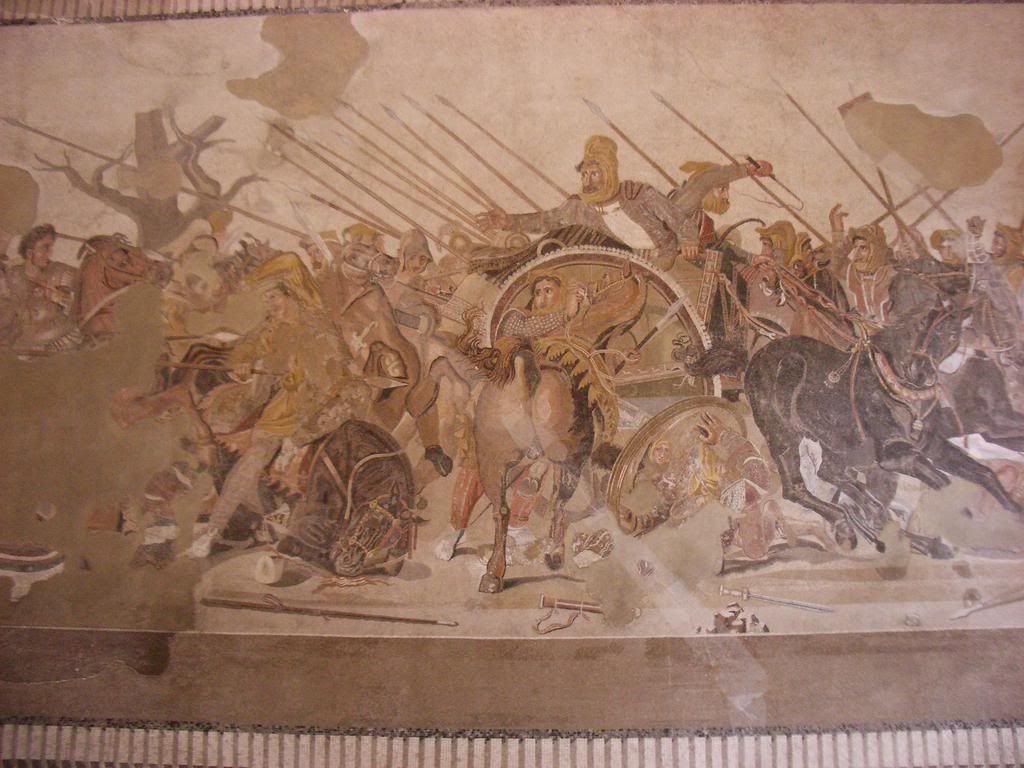


Letting my imagination run with the idea of past lives, I came up with several past lives, as it were. I’ve marched with Alexander the Great (probably as a camp follower), stood in a line of men with a muzzle loading rifle and fired at the enemy. And since I feel very close to WWII, I decided I was a WASP who died in the war, as I was born (in this life?) after the war.


Just like when I started to write, instead of Medievals, I’m writing in the Americas. My first book, KENTUCKY GREEN, takes place in frontier territory in 1794. I feel drawn to the frontier. When I visited Yorktown Victory center many years ago, they have a recreation of a colonial/frontier farm. Walked into that log cabin, and felt at home. I could have lived there in the 1700s.

This is a really great exercise for writers, to image, or feel the past in some way. So are you writing in the era that you feel closest to? Have you visited historical sites and ‘felt’ a connection? Or maybe didn’t feel a connection much to your surprise? Our local chapter had a workshop about past lives once, and everyone had a lot of fun with the idea. I would have never thought of this as a tool to use with writing without that conversation in the teacher’s dining room.

Do you think imagining past lives might be of help with writing historical?

Sunday, October 9, 2011

THE SLEEPING GIANT

THE SLEEPING GIANT AND OTHER FIGURES FROM
NATIVE AMERICAN LEGENDS YOU DON’T WANT TO CROSS

Legends of any kind have always fascinated me, and while researching for my book, Widow’s Walk, I’ve become even more interested in them. Since the action in the book takes places in Northern Minnesota, including among an Ojibwe tribe, that is where I began my research. One of the more interesting, and dangerous, legends is that of The Sleeping Giant.
Looking across from Thunder Bay, you can see a formation of land called The Sleeping Giant. According to the Ojibwe legend, the Spirit of the Deep Sea, Nanna Bijou, rewarded the tribe for their loyalty. The chief learned from the Spirit about a tunnel leading to the center of rich silver mine. He warned that if the Ojibwe tribe were ever to tell the White Man of this mine he, Nanna Bijou, would be turned to stone. Thereafter, the Ojibwe became famous for their silver ornaments.
But, as often happens, others learned of this and the Sioux even tortured and killed to learn where the tribe got the silver for their beautiful ornaments.
Unwilling to accept defeat when the Ojibwe refused to divulge the secret, a Sioux warrior disguised himself as an Ojibwe, learned of the mine’s location, and took large pieces of the silver.
Unfortunately, he stopped at a white trader’s for food, and because he had no furs to trade, used a piece of silver instead. The traders filled him with firewater and then persuaded him to lead them to the “silver islet.”
But they were not to succeed. They were within sight of the “Silver Islet” when a terrible storm struck. The white men drowned and the Sioux warrior ended up drifting in a canoe – crazed.
That wasn’t all. According to Native American Legends,
“Where once was a wide opening to the bay, now lay what appeared to be a great sleeping figure of a man. The Great Spirit’s warning had come true and he had been turned to stone.
“Today, partly submerged shaft to what was once the richest silver mine in the northwest, can still be seen. White men have repeatedly attempted to pump out the water that floods in from Lake Superior, but their efforts have been in vain. Is it still under the curse of Nanna Bijou, Spirit of the Deep Sea Water? Perhaps….who can tell?”
OTHER ANIMAL LEGENDS FROM
IMPORTANT CHIPPEWA MYTHOLOGICAL FIGURES
There are other myths that abound among Native American legends and the three I’ve listed below could certainly fire an author’s imagination.
Underwater Panther (Ojibwe name variously spelled Mishibizhiw, Mishibizhii, Mishipeshu, Mishipizheu, and other ways): This is a powerful mythological creature something like a cross between a cougar and a dragon. It is a dangerous monster who lives in deep water and causes men and women to drown.
Mishiginebig (also spelled Mishiginebig, Mishi-Ginebig, Meshkenabec, Msi-Knebik, Kichikinebik, or other ways): An underwater horned serpent, common to the legends of most Algonquian tribes. Its name literally means Great Serpent, and it is laid to lurk in lakes and eat humans.
Animikii or Binesi (also spelled Animiki, Animkii, Nimkii, Bnesi, Bineshi, and other ways): Thunderbird, a giant mythological bird common to the northern and western tribes. Thunder is caused by the beating of their immense wings. Although thunderbirds are very powerful beings, they rarely bother humans, and were treated with reverence by Ojibwe people. Animikii, which means “thunderer,” is pronounced uh-nih-mih-kee, and Binesi, which means “great bird,” is pronounced bih-nay-sih.”
My WIP so far has none of these legends, though it does contain that of the witch tree. I may use one of these, but no more. However, my imagination is working on another story, maybe several, where I can write around one of these most interesting legends.
Joan K. Maze
Writing as J. K. Maze
www.joanmaze.com
http://sleuthingwithmollie.wordpress.com
http://homicideandmayhem.wordpress.com
Murder By Mistake, book 1 in the Mollie Fenwick Mystery Series, available as an ebook from Red Rose Publishing, B&N, Fictionwise and Amazon.
Murder By Mistake, book 1 in the Mollie Fenwick Mystery Series, available in paperback from Amazon.
Murder For Kicks, book 2 in the Mollie Fenwick Mystery Series, available as an ebook from Red Rose Publishing, Fictionwise and Amazon
Framed In Fear, romantic suspense set in Colorado, available as an ebook from Red Rose Publishing, Fictionwise and Amazon
Murder By Spook, book 3 in the Mollie Fenwick Mystery Series, in progress

Friday, October 7, 2011

Saratoga Springs: Grand and Gilded

Looking for a great setting for your gilded age historical? I found one for mine when I recently visited Saratoga Springs, NY.

For much of the 19th century, Saratoga Springs was the “Queen of the Spa” resorts with the added attraction of horse racing and a first rate casino along with proximity to New York City from which it drew a large part of its monied clientele, attracting the likes of the Vanderbilts, Fisks, Goulds and Asters. For a time, it also boasted the largest hotels in the world such as the Grand Union Hotel where congressman, senators and bankers gathered, The United States Hotel where the likes of Vanderbilts, Goulds and Rockfellers held court on the piazza and Congress Hall which hosted the Asters and other old New York scions.

Saratoga Springs and its mineral waters had attracted visitors since the early 1800’s. With concerted efforts on the part of innkeepers and hotel owners, by the 1830’s Saratoga was a fashionable place to go for one’s health but also for "good society" once lectures, entertainment and hops (balls) were added to the fill the days and nights. The 1830’s also saw Saratoga purposely go after gamblers in hopes they would test their skills “at faro and chuck-a-luck in the billiard halls and bowling alleys, and a room was fixed up for roulette.” (Saratoga: Saga of an Impious Era by George Waller).

Before the Civil War, Saratoga had always attracted a lot of southern families who migrated to the cooler north during steamy summer months. Though the Civil War cast a shadow over the place during the war years, as soon as the war ended, the Southern families returned. The New York Times correspondent reported in a June 26, 1865 article that “… I have learned that several families from the South, the avant couriers of a large influx from  regions most war-scarred, have engaged rooms here, with the view of enjoying again a luxury long debarred. This points not only to peace, but fraternity. The land longs for the latter, to confirm and complete the former.  Both established, and the cup of the people’s joy is full.”

It was really after the Civil War, and after several fires which forced the rebuilding of some of the key hotels in a much grander style, that Saratoga began its opulent phase.

The scale of many of these Saratoga Springs hotels was monumental. The Grand Union was updated several times but in 1875,  it claimed a ballroom that was 85 x 60 feet with 27 foot high ceilings from which hung three large crystal chandeliers. Covering seven acres right on Broadway, the main thoroughfare, The Grand Union had over 824 rooms available, some of them cottages which rented for $125 per day. The cottages were used mainly by families but a single bedroom cottage could be a discreet place to house one’s mistress. Fodder for many stories, I’m sure.


The Grand Union

The Grand Union boasted two miles of corridors, twelve acres of carpet and an acre of marble. The Grand Union dining room was capable of handling up to 1400 guests at a sitting " with 35 cooks, 200 waiters, 12 carvers dispensing 1200 quarts of milk, 1500 pounds of beef, 80 chickens and 250 quarts of strawberries" or so the guide book of the day related. (The Grand Union Hotel by Beatrice Sweeny, City Historian Saratoga Springs, New York). Where would you find such grandeur today?

A block down Broadway, The United States Hotel was almost as large encompassing a three-acre park within its boundaries and 768 guest rooms and cottage suites and  all equipped with marble washstands and cold running water with some of the suites offering a private bath. It also had a large ballroom and spacious dining room, all superbly appointed. Congress Hall was on a slightly smaller scale but all three lined the main street with large piazza's overlooking Broadway. Seen in one long sweep the hotels made quite an architectural display.


There were enough places to stay that the middle class could find accommodations and rub shoulders with the elite during visits to the springs and, of course, at the many hops that were held. From that stand point, Saratoga was certainly a more “democratic” resort than say Newport where hotel space was limited and one needed a grand home or an invitation to one to be part of its society. Florence Vanderbilt met her husband, a Western Union clerk, amongst the glitter of Saratoga Springs.


In 1877 the Adelphi Hotel was built, squeezed in between the Grand Union and the United States. The Adelphi's piazza also overlooked the street and added to the unified architecture of these great hotels. The Adelphi only had a little more than 150 rooms but it entertained some of Saratoga's elite as well, including John Morrissey, the colorful Tammany Hall politician who helped bring racing and gambling to The Springs. He died at the Adelphi in 1878 with citizens keeping vigil outside its doors.

The Adelphi's smaller stature is what helped save it from the fate of it's bigger sister hotels. As modern conveniences such as elevators, electrical wiring, indoor plumbing, central heating, phones, etc. were required by vacationers, updating such mammoth palaces became financially prohibitive. With travel made easier, more options opened up. By the 1920's these grande dames were shadows of their former self. By the forties they were in substantial decline. The United States went up in smoke during that decade and the wrecking ball signaled the demise of the Grand Union in 1953.

The Adelphi's lobby


The Adelphi, however, managed to hang in there and in 1977 the current owners purchased it and started to restore it to it's former glory. Today, you can get a taste of the grandeur of Saratoga's Gilded Age with a stay at the Adelphi where all modern conveniences await you as you step back in time. We stayed at the Adelphi during our visit in a beautifully appointed Queen suite and savored every wonderful minute of it. 

Next month I will have more on some of the colorful visitors who called Saratoga Spring home during the summer season. So I ask you again, where could we find such grandeur today?

Anne Carrole writes about cowboys who have grit, integrity and little romance on their mind—and the women who love them. You can check out her contemporary romance, Re-ride at the Rodeo, at www.annecarrole.com. She also is co-editor of the review website, www.lovewesternromances.com

Thursday, October 6, 2011

INDULGING OUR FANTASIES

19th Century cabin
One of the greatest things about writing is that authors are able to indulge their own fantasies. One of mine is that I would have loved living in the West during the last part of the 1800’s. Maybe! At least until the weather was severe and I had no central heat/air, no clean bathroom with running water, no antibiotics, and on and on. It’s a romantic time to consider, which is why I love writing romances set in the American West (probably much more than I would like returning to that time).

Maureen O'Hara
Another of my fantasies is that I wanted to look like the young Maureen O’Hara. More’s the pity, for I look nothing like her. But we’re talking about fantasies, right? This is why Cenora Rose O’Neill, the heroine of my 2010 western romance, THE TEXAN’S IRISH BRIDE, strongly resembles Miss O’Hara in appearance. What authors can’t accomplish ourselves, we accomplish through our characters.


When the infamous 1845 Irish potato famine struck and millions in Ireland literally starved to death, there was a mass immigration of Irish into the United States. But the O’Neill family didn’t lose their land in the famine. They were turned off many years later by a spiteful landlord. Due to her lack of schooling, Cenora cannot read cursive and reads only a few words in print. Her father, Sean O’Neill, can read a newspaper (slowly), and has done all the reading for his family and their traveling companions. On the other hand, the McClintocks value education, and Dallas McClintock reads most evenings. This difference causes only one of the many conflicts that arise in the book.


Irish cottage
When forced off their plot of Irish land with only what they could carry, Cenora and her family fell in with a group of Irish Travelers. The Travelers, or tinkers, are not gypsies but are descended from medieval minstrels and poets who traveled Ireland telling myths and stories. In medieval times, the minstrels and poets were respected and learned. Many Irish families turned out of their homes drifted in with the traveling minstrels, eventually becoming the Irish Travelers--not so respected or learned. Travelers have their own language (cant), Sheldroo, which--amazingly enough--is linked by scholars to medieval language. They camped in fields at first. Later they acquired tents, then the colorful wagons that resemble gypsy wagons, such as the ones used in my novel. Like people everywhere, some Irish Travelers are good, some are bad. The same is true for those portrayed in THE TEXAN’S IRISH BRIDE.


Irish fields
The 19th and early 20th century Traveler wagons are unbelievably compact, and are brightly painted inside and out in red, blue and green with yellow pinstripes. Seeing them in several museums brought home the skill and functionality of these wagons. That describes the two wagons acquired by the O’Neills through their ability to play instruments while Cenora sings for crowds when they pass through towns. Unfortunately, Sean O’Neill’s only abilities are playing music and the gift of gab--not much to supply a family’s needs. His sons Finn and Mac trade ponies for a bit of extra coin and the family barely gets by. On the other hand, rancher Dallas McClintock has a strong work ethic and sense of honor. You can see more trouble looming, can’t you?
 In THE TEXAN’S IRISH BRIDE, Cenora Rose O’Neill knows her father somehow arranged the trap for Dallas McClintock, but she agrees to wed the handsome stranger. She’d do anything to protect her family, and she wants to save herself from the bully Tom Williams. She believes a fine settled man like Dallas will rid himself of her soon enough, but at least she and her family will be safely away from Williams.


Texas rancher Dallas McClintock has no plans to wed for several years. Right now, he’s trying to establish himself as a successful horse breeder. Severely wounded rescuing Cenora from kidnappers, Dallas is taken to her family’s wagon to be tended. He is trapped into marrying Cenora, but he is not a man who ever goes back on his word. His wife has a silly superstition for everything, but passion-filled nights with her make up for everything—even when her wild, eccentric family nearly drives him crazy.


I hope you’ll read and enjoy THE TEXAN’S IRISH BRIDE. The gorgeous cover is one of my favorites. The buy link for THE TEXAN’S IRISH BRIDE is www.thewildrosepress.com/caroline-clemmons-m-638.html in print and e-download, and it’s also available at Amazon and other online stores. My website is http://www.carolineclemmons.com/. Other books at The Wild Rose Press are the contemporary romance HOME, SWEET TEXAS HOME, historical SAVE YOUR HEART FOR ME, and paranormal time travel OUT OF THE BLUE. My backlist is now available on Smashwords and Amazon Kindle for 99 cents each, and so is my new mystery, ALMOST HOME.

Monday, October 3, 2011

The Staff of Life in the Middle Ages

This is where it all started, the 1963 movie, Tom Jones. Albert Finney (Tom Jones) licks his chicken bones and Joyce Redman (Mrs Waters) looks like she's making love to an apple. It showed that playing with your food could be fun and anything edible will do! But what was a banquet really like?
The extravagant feasts and banquets of the Middle Ages are legendary. However, while menus for the wealthy were extensive, only small portions were taken. Hosts were expected to offer extensive choices.  With more extensive travel, a change in society emerged, possibly prompted by the Crusades, that led to a new and unprecedented interest in beautiful objects and elegant manners. This change extended to food preparation and presentation and resulted in fabulous food arrangements with exotic colors and flavorings. Banquets prepared during the Middle Ages were fit for a king.
Staffing and Presenting the Banquet
The kitchen squires where responsible for provisioning the kitchen. Assisted by the cooks, they chose, purchased, and paid for the goods.
The food was plated on the serving dishes and staged in the kitchen until it was time to bring to the tables in the Great Hall.
The Noble of the castle, and his distinguished guests, sat at a great table that was set on a raised platform, a dais, at one of the hall.
Buffets were tables with a series of wooden stepped shelves. The number of shelves indicated the host’s rank. The more shelves the higher the rank. The 'Stepped Buffets' were covered with rich drapes and used at banquets and feasts. The Nobles impressed their guests by using their finest gold or silver plates as service plates on the buffet.
The banquet feast consisted of three, four, five, and even six courses. At times the presentations of the main courses were made into a theatrical representation with colored jellies of swans or peacocks or pheasants with their feathers. Served as a specialty the beak and feet of these birds were gilt and placed in the middle of the table as a centerpiece.
French Medieval Banquets
The French cooking historian described a great feast given in 1455 by the Count of Anjou, third son of King Louis II of Sicily. This description demonstrates just how theatrical a presentation can be:
“On the table was placed a centre-piece, which represented a green lawn, surrounded with large peacocks' feathers and green branches, to which were tied violets and other sweet-smelling flowers.
In the middle of this lawn a fortress was placed, covered with silver.
The fortress was hollow, and formed a sort of cage, in which several live birds were shut up, their tufts and feet being gilt.
On its tower, which was gilt, three banners were placed.
The first course consisted of a civet of hare, a quarter of stag which had been a night in salt, a stuffed chicken, and a loin of veal.
The two last dishes were covered with a German sauce, with gilt sugar-plums, and pomegranate seeds.
At each end, outside the green lawn, was an enormous pie, surmounted with smaller pies, which formed a crown. The crust of the large pies were silvered all round and gilt at the top.
Each pie contained a whole roe-deer, a gosling, three capons, six chickens, ten pigeons, one young rabbit, and, no doubt to serve as seasoning or stuffing, a minced loin of veal, two pounds of fat, and twenty-six hard-boiled eggs, covered with saffron and flavoured with cloves.
For the three following courses, there was a roe-deer, a pig, a sturgeon cooked in parsley and vinegar, and covered with powdered ginger.
The feast continued with a kid goat, two goslings, twelve chickens, as many pigeons, six young rabbits, two herons, a leveret, a fat capon stuffed, four chickens covered with yolks of eggs and sprinkled with spice, a wild boar, some wafers and stars and a jelly, part white and part red represented the crests of the honored guests, cream covered with fennel seeds and preserved in sugar, a white cream, cheese in slices, and strawberries, and, lastly, plums stewed in rose-water
Besides these four courses, there was a fifth, entirely of wines then in vogue, and of preserves. These consisted of fruits and various sweet pastries.”
I researched medieval banquets when I wrote Knight of Runes.  Eating is fundamental and enjoyable. While Arik and Rebeka don’t get it on quite like Tom and Mrs. Waters there is definitely an air of the playfulness in the scene.  The trouble with watching that scene is I really get hungry. I’ll let you figure out for what!
Ruth A. Casie 
Pre-Sale Now Available for Knight of Runes

Friday, September 30, 2011

A Renaissance Festival Celebration

Every year my husband and I take our kids to the Renaissance Festival (and if we can get away from them, we'll go again just the two of us!)

It is this time during the year that I can immerse myself, literally, in the time period I love, and mingle with others who are just as obsessed with history, royals, mead, turkey legs, jousting, etc... While I don't dress up (yet), I do dress up my little pretties. 

This year, we wanted to get our entire family involved, and we did pretty well! Since one of our daughters has a September birthday, we invited the whole family to join us in celebrating her birth at the Renaissance Festival. We had 7 of our family members take us up on it! It was a blast, and I can say it was probably one of the most fun times I've had at the festival because I was able to share my love of history and festival activities with more people.

For my post today, I thought I'd share with you some of the pics I took. Have you been to a Renn Fest lately?


Me and the DH being silly (yes he is the Queen and I am the King)

My and my girls after the three of them were presented to Henry VIII's court.

The oldest princess on a pony

My husband and oldest princess in the front, and his brother and my youngest princess in the back--riding and elephant (My husband is VERY tall--his brother is about 6 ft., we made fun of how my B-I-L looked so small next to him.)

My sister, her sig and my 2nd princess on an elephant.


The DH in the stocks :)

Baby Birthday Princess was WIPED out. She slept for about an hour as the rest of us continued our festival fun.

Couldn't get this pic to turn... but that is a giant sundae :)

The 2nd Princess in the stocks for being a gossip :)


*~*~*~*

Eliza Knight is a multi-published author of historical romance and erotic romance. Visit her at www.elizaknight.com

Available now! A Lady's Charade -- An I-Books (I-Tunes/Apple) Top 100 Popular Romance Novel!


From across a field of battle, English knight, Alexander, Lord Hardwyck, spots the object of his desire--and his conquest, Scottish traitor Lady Chloe.


Her lies could be her undoing…

Abandoned across the border and disguised for her safety, Chloe realizes the man who besieged her home in Scotland has now become her savior in England. Her life in danger, she vows to keep her identity secret, lest she suffer his wrath, for he wants her dead. 

Or love could claim them both and unravel two countries in the process…

Alexander suspects Chloe is not who she says she is and has declared war on the angelic vixen who's laid claim to his heart. A fierce battle of the minds it will be, for once the truth is revealed they will both have to choose between love and duty.

Thursday, September 29, 2011

Something about Welsh

As you have no doubt noticed over the past months, I have a particular preference for any and all things Welsh. So, as a treat, I am going to give a short lesson on the Welsh language. I thought you might enjoy learning a few phrases to slip into your conversations when you visit this country so that you can impress your hosts.

One of my favorite idioms is dros ben llestri: literally, 'over heads of dishes'. When someone goes dros ben llestri, they've gone over the top. Pronounced pretty close to the way it looks: drohs ben llestri - double L is aspirated: put your tongue at the roof of your mouth just behind your teeth and force the L sound out in a hiss.

Another saying is cadw cwn a chyfarth ei hun: keeps dogs and barks himself. This describes someone who won't allow anyone to help him, has to be in control of situations. Sound familiar? This phrase is pronounced cah-doo coon ah chyvahrth eye heen - ch is as in loch - aspirated.

When it seems that all good things (or bad) seem to end up in someone else's life, you could say i'r pant rhediff y dwr: to the gully runs the water. Sounds like 'ear pant rhediff uh doer'. Rh is aspirated. In English, some of us say an H in front of the W in words like when, why, where. This is never a heavy sound, more like an exhaled sigh. It's the same in Welsh. A soft H in front of the R.

These days, a lot of people around the world are ar y clwt, literally, on the rag - destitute. Remember that W and Y are both consonants and vowels in Welsh. In this case, the pronunciation is close to what it looks like: ahr uh cloot.

Greeting people in Wales with Shw mae? is always acceptable. It's like asking What's up? or How goes it? Shw is a corruption of sut (sit) which means how. Mae is a form of the verb bod = 'to be'. Shw mae (shoo my) means 'how is'.

All Welsh vowels are Italianate - open and strong which is why Welsh is such a lovely language to sing. If you'd like to know more about Welsh folk music, the National Museum of Wales has a fantastic archive. You can also see examples of Welsh music at Cronfa. The American, Phyllis Kinney, has dedicated her life to Welsh folk music. She and her husband, Meredydd Evans, are renown for their academic work in Welsh traditional music.

People always ask me if I found Welsh hard to learn. Since I've now spoken it on a daily basis, I have to answer No, but in my first days and weeks, I couldn't get my tongue around words like rhwngwladol at all. One of the best ways to learn any language is to sing in it. In my forthcoming novel, The Gatekeeper, Gwennan teaches Jehan-Emíl to sing a simple song to help him learn her language. Learning Welsh for me was one of the most life-altering things I've ever done - for one thing, I would never have written Traitor's Daughter.

Trac is a good place to begin an exploration of Welsh traditional music and dance. This organization is also on Facebook so you can get to know the people who are promoting: The future of the tradition and the tradition of the future.

Thank you for reading. If you have any questions, please let me know.