Where Romance and History Meet - www.heartsthroughhistory.com/

Pages

Friday, April 15, 2011

HIstorical Fun Facts in Prisoner of Love

In my latest historical romance, Prisoner of Love, coming from Ellora's Cave in June, I included some historical tidbits just for fun. I write mainly Regency-set historical romances, but the truth is my graduate degree is in American History. Same century, 19th, but different continent. So I took one of my characters, Michael, to America for part of the book. He relates his experiences there when he is back in London.

Some of the historical facts in the book are integral to the plot. Michael is in New Orleans in the winter of 1819-1820, when they had a slave revolt on one of the plantations there. The revolt is what causes Michael to return to England. But I had him travel around the still quite young United States for almost two years prior to that. He visited the newly rebuilt White House and had tea with President James Monroe. The White House was burned down during the War of 1812, and Monroe had just moved back into the partially restored house in 1817. They discussed the admission of Missouri to the Union. The debate gripping the country at that time was whether Missouri should enter as a slave state or a free state, and would culminate in the Missouri Compromise. Missouri entered as a slave state and Maine entered as a free state.

Michael traveled up the Mississippi from New Orleans to St. Louis by steamboat. In St. Louis he met fur trappers and explorers--Americans, French Canadians, Irishmen and Englishmen--trading and trapping beaver in the West. He stayed in the home of Auguste Chouteau, a famous historical figure in the history of the Louisiana Territory. The Chouteau family founded the cities of St. Louis, Kansas City and Pierre, South Dakota. They controlled the fur trade in the area.

I wrote my Master's thesis on the Chouteau family. One of these days I'm going to write a book about them. They have a very colorful and romantic history. Frankly, I love this period of American history and wish that more romances were set there. I have plans to take this series, my Brothers In Arms series, to America again, but this time to actually set a story there.

Do you like to include favorite historical tidbits in your books, even if they aren't integral to the plot? What about as a reader? Do you enjoy reading these, or do you wish authors would stick strictly to the story? I know that too much of a good thing can still be too much. But I like it when an author includes one or two fun things.

Wednesday, April 13, 2011

Writing Historical Romance and Who to Invite for Dinner


I found this interview I did a few years ago, and thought it had some good information on writing historical romance, as well as one of my favorite questions about who to invite to dinner. Hope you find it interesting.


1. Colorado Silver, Colorado Gold is your second historical romance. Would you tell us a little about the book?


The book is set in Durango, Colorado. I created this story around the setting. When I was a child we lived in California, but every summer drove back to Illinois to visit the grandparents. I remember how beautiful Durango was, so I wanted to set a historical here. I got a book of Durango history, and used what I found for the background for the story, the mining, the smelters, etc. 2. Both the hero and heroine are hiding secrets .What problems did you run into maintaining this tension and how did you deal with them?


The fact that they are hiding secrets is what keeps them from going right into a relationship. The reader is privy to Wes’ work for Wells Fargo and why he’s in Durango right up front, so there was no real problem in writing Wes. I had to be a little more circumspect with Julie, as the reader knows she concealing something, but not exactly what she’s concealing. The hard part for writing Julie is not to reveal too much when in her point of view or internal thoughts. Just enough to keep the reader wondering, but not enough to give the secret away until the proper time. This creates a push-pull in their feelings, as they are attracted to each other, but don’t feel they can do anything about the attraction.


3. Both your first book, Kentucky Green, and Colorado Silver, Colorado Gold are set on the American frontier. What in your opinion is the hardest part of writing stories in this setting? What is the easiest?

Well, since I a BA and MA in History and taught I was familiar with the history so once I decided where and what type of story I wanted to write, I had a general idea to start. Doing the detailed research is easy and fun for me. For Kentucky Green I did research on Kentucky long rifles, Conestoga wagons, their average speed, how far it was from one little town in Pennsylvania to another. You can find really great thing, such as a WPA travel guide to Pennsylvania that listed all the little towns, when they were founded, if they’ve changed names, what they might be famous for, etc. And I used this as a guide for the wagon train trip.


For Colorado Silver, Colorado Gold, I learned about mining and smelting in Colorado, the history of Wells Fargo, etc. The hard part of this is to stop doing the research and start writing. And while I like research, my formal training didn’t cover what clothing people wore, so I had to do a lot of research on who would be wearing what, when.


One problem I have is conveying the social conventions of the time I’m writing in without over explaining (author reader-feeder). For instance in Kentucky Green, it takes a while for the hero and heroine to even think of each other by their first name before actually addressing each other that way. That was the convention of the time, where even married people addressed each other as Mr. and Mrs. in public. Another problem is writing in a time period where S*E*X* (as Erma Bombeck used to write) wasn’t quite so prevalent. Today there is S*E*X everywhere you look. So it had to balance the actual conduct of the time with today market that wants things hot, hot, hot.


4. You're ready to begin a new project. What's the first thing you do? Research? Character bios? Plot and plan? Or just jump in and let the muse take you?

The staring place can be the setting, or just the idea of a hero or a heroine, or a plot line such as a marriage of convenience. Then you noodle around with the characters (how are they wrong for each other, how will they be right for each other) and the plot, until I have a vague outline. Then I’m fortunate enough to belong to a critique group, that over the fifteen plus years we’ve been together we’ve become a plotting group. We have an annual retreat where we each bring an idea and do the brainstorming to flesh out the characters and the plot line.


Then I write a narrative outline of the story with all the important points before I actually start writing. I sometimes do a first person bio, but not always. I know some writers feel that plotting takes away the mystery of the story, but I like to have a road map, but with my general outline, all the details somehow revel themselves as I write the story.


For example, in one of my ms. I wrote in the outline ‘Johnny finds out where the fence cutter will strike’ but had no idea how he would find out, but as I wrote the story, it figured itself out. Too weird, huh? 5. What advice can you offer to writers who are working toward publication?

Have friends who are also writers – no one else understand except other writers what we worry about, or understand and support us. My husband loves me, but he just doesn’t get ‘writing’.


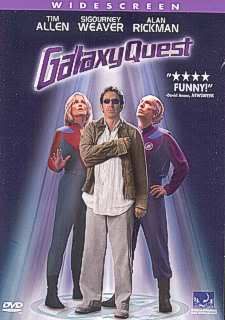
And you have to keep thinking of the line from Galaxy Quest – “Never give up, never surrender!”


6. And lastly, if you could invite three people to dinner (real, fictional, living or dead), who would they be? What would you serve and why and what would you want to discuss over coffee?


Wow! What a choice. Did you ever watch the old PBS series Meeting of the Minds where Steve Allen had historical figures to dinner and a discussion?


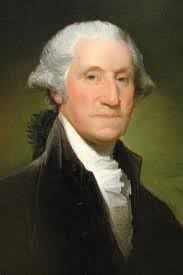
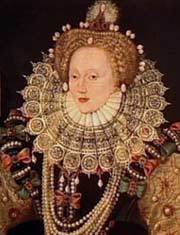
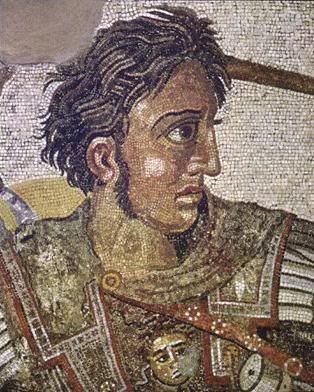
After a lot of thought (too many possibilities!) I think I’ll have dinner with George Washington, Elizabeth I and Alexander the Great. These are personalities who fascinated me while studying/teaching history. I think it would be interesting to find the real person behind the historical persona they’ve become. All of them seem to be bigger than life characters but from my studies I think they all were in essence really very private people who only allowed a few real friends to really know the people they were.


And it, it just occurred to me, none of them left a direct descendent. What to serve would be a real problem since George, Elizabeth and Alexander come from such different times. So I think I’d go with a simple menu, roast turkey and new world vegetables such as corn and tomatoes, some bread, then round it out with fruit (apples, pears, grapes) and nuts along with a couple of types of cheese, one or two types of wine, and of course coffee and tea.

Discussion is easy as we would discuss leadership and the responsibility there of. George was a natural leader, who was willing to step up and take on the role and responsibility.


Elizabeth had to keep her head (literally) on her way to becoming queen. And then as a woman in a man’s job, learn to lead men without making them resent it.


Alexander must have been some sort of super charismatic man to get his troops to follow him to the ends of the earth.


These three were also in a sense the first/originator of their role – President, a reigning Queen, a conqueror.


If you got to invite three people from history for dinner - who would it be?

Friday, April 8, 2011

Civil War Trauma

Post-traumatic stress disorder. It’s a timely subject, considering how many young men and women are serving in the military all over the world today. But what of the men who fought during one of the bloodiest conflicts of the time, a war that pitted brother against brother, father against son?

What of the American Civil War? Surely the suicidal frontal assaults, troops marching forward in formation to be decimated by rifle and artillery fire, battlefields littered with the dead and dying, must have had a horrific effect on those soldiers. Yet surprisingly little has been written on the subject.

Post-traumatic stress disorder (PTSD) is a psychological syndrome which results when a person is exposed to a traumatic event such as warfare. Although PTSD only really emerged as a psychiatric diagnosis in the 1970s, it’s clear that veterans of the Civil War also suffered from it. Its symptoms include anxiety, a dread of calamity, depression, flashbacks and nightmares; emotional numbing or apathy. PTSD can include social pathologies, as well, including suicide, drug or alcohol abuse, and domestic violence.

One study states that among the typical symptoms of PTSD in Civil War soldiers, the most common is fear, specifically the fear of being killed. This fear would often lead to a man barricading himself in his house, often at night, and stay up watching and waiting for the imagined foe to appear. Others would keep weapons at their side at all times, and sometimes sleep with an axe or other such weapon under their beds. The usual treatment of the day was heavy doses of sedatives to keep them calm.


In Coming Home, my new release from Highland Press, my hero, Cavan Callaghan, is a veteran of Thomas Francis Meagher’s Irish Brigade who fought at Antietam. He’d lost a lot even before joining up, and I knew he couldn’t have come through that bloody conflict without at least a few scars. But I decided to make his scars the internal, rather than the external type. Cavan’s PTSD manifests itself in an extreme possessiveness of those he loves, even as he tries to deny the extent to which he cares for them. He’s sure my heroine, Ashleen, will eventually betray him. And he’s pursued by the fear that the fragile happiness he’s discovered in Ireland will be snatched away


“The more things change, the more they stay the same…”

~ Alphonse Karr, 1808-1890


Here’s an excerpt from Coming Home:


The Atlantic Ocean, 1867

He was going home.

Home. Such a simple word. And for so long now, such an unattainable dream.

Yet as he stood on the deck of the Mary O’Connor, he thought maybe he’d finally find a real home once again.

When Johnny comes marching home again . . .

He looked seaward. The salt wind tugged at his hair. Spray stung his eyes. Gulls wheeled and shrieked overhead. Open water lay beyond the horizon, and beyond that still, his new life. In a few weeks, the Mary O’Connor would dock in Galway Bay, and from there he’d head for the small village his parents had spoken of with such love. He felt a stirring of emotion, the first spark of excitement since—

Deliberately he cut off the thought. He was no longer a soldier. There would be no more Rebel yells, no more guns, no more battles. He was no longer Captain Callaghan, so-called hero of the Irish Brigade.

He was just plain Cavan Callaghan, an Irishman searching for peace.

What would Ireland be like? For as long as he could remember, he’d heard his parents speak wistfully of the country they’d left behind. The green fields and sea-swept coast. The heather-strewn countryside filled with wild strawberries and prickly gorse. They’d spoken of the people, too, but especially of his father’s brother.

The last of the Flynns now, except for himself.

His mother had said the village of Ballycashel lay some nine miles from Galway City. What would he find there? He knew about the Hunger, of course. Had any of his family survived?

Or would he find the same devastation he’d confronted on his return from the war?

A ripple of sound floating on the briny breeze told him he wasn’t alone. Recognizing the delicate notes of a penny whistle, he glanced around. One of his fellow passengers, obviously an Irishman, lowered the instrument from his lips and smiled, his foot tapping in jig time.

The piper began playing anew, and a raw slash of anguish ripped through Cavan’s gut. He knew the words well, and the tune the man played so effortlessly and with such emotion.

He’d prayed never to hear them again.

The minstrel boy to the war has gone,


In the ranks of death you’ll find him . . .

He squeezed his eyes shut, the ‘ranks of death’ marching through his memory. So many friends, his comrades-in-arms, who would never return . . .

His brother.

With a hard shake of his head, he strode away from the haunting melody.

He was going home. And there he would find peace.

There would be no more war.

Wednesday, March 30, 2011

Buried Alive...Dungeons

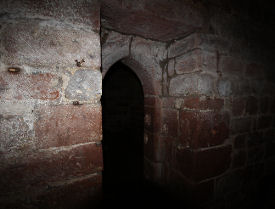
There is something eerie and haunting about entering a dungeon. Your breath feels halted in your chest, your heart rate quickens, and your eyes scan the dark depths for shadow people and ghosts of past prisoners who died, having already been buried alive, beneath the castle fortress.

While the word dungeon, brings to mind underground places--and indeed in many places they were, the word is originally derived from donjon, a French term for Tower--which is above ground. Throughout history, most prisoners were kept, in actual towers cells, however the most famous and immortalized are those dark, decrepit underground cells.

It has been said that the underground cells were occupied by those who would spend the remainder of their lives there, while tower cells were reserved for those who would be quickly executed, or set free.

As terrifying as it may have been to be, taken to the Tower of London--shoved in a cell with no idea if you should live or die--at least you might have had a glimpse of the outside through a window... or not... No, it may be the case that you would be taken to "Little Ease," the infamous dungeon of torture within the Tower of London's White Tower. There is a cell at the bottom, just four feet by four feet, so you can not stand, but neither can you lay flat. Not only would this grow extremely uncomfortable for your body--but would also wreak havoc with your mind.

In Carlisle Castle--first built by William II, the son of William the Conqueror, the dungeon is famous for its "licking stones." These stones collected enough moisture to keep prisoners alive, by licking them--that is until they were executed on Gallows Hill. (click HERE to see pics)

Oubliette's were popular in medieval times... Just a deep hole, maybe in the ground, maybe in the dungeon, closed with a hatch door. Prisoners were tossed inside the holes, and could not get out unless a rope was thrown in.  In other words, there was no escape, unless you had help, and most often, you did not. They were dank, dark, filled with excrement, worms and rats. Often those tossed in were forever forgotten about, and thus the oubliette became a darkened grave where it took days upon days for your torment to end with death. In fact, the word oubliette, means "to forget" in French.

Most torture was performed in the dungeons--which in my mind, most resembles a hell for the living. Here you would be racked--your body stretched until your sockets pulled out, your muscles tore, maybe flesh ripped and bones were broken.  Perhaps your fingers would be crushed one by one with a thumbscrew. Or your fingernails ripped off one by one. Hot pokers might burn your flesh. You may be whipped, or drowned. In any case, your stay would not be pleasant... pleasant would be for you to take your last breath.

In some of my works--mostly my medieval romances and my Tudor-era historical fiction (all of which have yet to be published--but soon, dear readers, soon!)--I make mention of dungeons, towers, prisons, oubliettes, mostly because the threat of death, of imprisonment was very real, especially for nobles and courtiers. Factions pitted against factions, one lord seeking revenge on another, someone scorned, someone jealous, someone wanting what you had, being born to the wrong parents... all of those things could lead to your death, and there was little you could do about it.

I've visited many dungeons in Ireland and France.  They were eerie, they were haunting, they left me breathless, and my mind whirling. Have you ever visited a dungeon? Have you put any dungeons into your work? Tell us about it!


*****


Eliza Knight is a multi-published author in historical romance, erotic romance, historical fiction, non-fiction and middle-grade mystery.  Visit her at http://www.elizaknight.com/ (romance/erotic romance and non-fiction writing craft), http://www.historyundressed.blogspot.com/ (Historical blog), http://www.authormichellebrandon.com/ (historical fiction) or http://www.mleighingles.blogspot.com/ (middle-grade mystery fiction).

Monday, March 21, 2011

Bad Girls and the Men Who Love Them

Femme fatale. What does the term bring to your mind? In the latest movie incarnation of Sherlock Holmes, the sleuth is intrigued and besotted by Irene Adler, a notorious thief with a dubious moral compass. She has a soft spot for Holmes, but you're never sure if she's working for him, or against him. She's perhaps the only woman who could take Holmes' mind off the clues around him, simply because he's so fascinated with her. Irene Adler's interactions with Sherlock Holmes call to mind the femme fatales of old. She may be luring him into a trap, or at the very least, thwarting his plans, but he's too besotted to resist. Ah, the allure of the femme fatale.

In the movie Body Heat, Kathleen Turner’s character Matty Walker might spring to mind. Matty Walker’s seduction and duping of Ned Racine, a hunky lawyer so dunce-like one wonders how he passed the bar, is a classic case of a femme fatale luring a man to think with parts of his body other than his brain.Femme fatale is a French term for a deadly woman. Literally translated “fatal woman”, a femme fatale is a strong-willed, manipulative woman who is as alluring and irresistible as she is dangerous. The femme fatale leads men into danger or compromising situations with her seductive charms. This female archetype is present in mythology and folklore, literature, film, and, of course, history.

How different would the world be without the femme fatale? If Henry VIII were alive, we might ask him that question. Thanks to Anne Boleyn’s seductive charms, the former Defender of the Faith (the title conferred on Henry by Pope Leo X in 1521) began the struggles with the Roman Catholic Church that eventually led Henry to separate the Church of England from papal authority. His desire to annul his marriage and wed a younger, more alluring woman spurred him to sever his ties with a religion he’d staunchly upheld until Anne Boleyn came into his life.

Femme Fatales have been around as long as humans have walked the earth. History documents the talent for romantic liaisons that brought rulers like Cleopatra power and infamous spy Mata Hari the information she coveted. A femme fatale can charm a man into doing her bidding without him giving a thought to the consequences. Unfortunately for the enamored male, love usually has very little to do with the couplings of the femme fatale.

The Bible contains numerous references to femme fatales, including Delilah, the temptress who tricked Sampson into getting his infamous haircut and Salome, a femme fatale whose seductive dance led Herod to order the beheading of John the Baptist. Folklore and mythology is populated with femme fatales such as Helen of Troy, Sirens, and Aphrodite.

The femme fatale is probably best represented in film noir. Movie classics such as Double Indemnity establish the femme fatale as a force to be reckoned with; films such as Basic Instinct and The Postman Always Rings Twice demonstrate the power of a seductive woman that’s used to lure a man into committing a murder that benefits the vamp. Even Chicago’s Roxie Hart is a femme fatale, though not as effective a femme fatale as her fellow jailbird, Velma Kelly.

Femme fatales also occupy a prominent place in literature. Oscar Wilde’s Salome, Dashiell Hammett’s Brigid O’Shaughnessy in The Maltese Falcon, and John Steinbeck’s manipulative, evil Cathy in East of Eden exemplify the use of the femme fatale archetype in English and American literature.

Even comic books have their share of femme fatales. Where would Batman be without Catwoman and Poison Ivy, or Daredevil without Elektra?

While writing this article, I pondered the question of femme fatales in romance novels. I’ve seem femme fatales used as scheming rivals or as villains who would drive a stiletto through the hero’s heart without a second thought, but I cannot recall seeing a femme fatale as the heroine. What are your thoughts on this? What are some examples of novels in which romance authors effectively used the femme fatale archetype as a heroine? Would this engage you as a reader? Would you become sympathetic to the heroine, even if she were a manipulative flirt? Would the author have to transform the character to a more sympathetic type, or would you relate to the femme fatale, flaws and all? I’d love to know your thoughts.

Saturday, March 19, 2011

Quotes by Women

by Anna Kathryn lanier

To celebrate Women’s History Month, I’m listing quotes by famous (and maybe not so famous) women. I also have links to a websites or articles page about the women. So, check them out.  And read all the way through to discover information about my contest.


It is not easy to be a pioneer -- but oh, it is fascinating! I would not trade one moment, even the worst moment, for all the riches in the world. – Dr. Elizabeth Blackwell, first woman in the United States to earn a medical degree, (1821-1910)

We are not what we know but what we are willing to learn. - Mary Catherine Bateson, writer and cultural anthropologist


Instead of getting hard ourselves and trying to compete, women should try and give their best qualities to men - bring them softness, teach them how to cry. – Joan Baez, American folksinger, (1941- )


One should hate very little, because it's extremely fatiguing. One should despise much, forgive often, and never forget. Pardon does not bring with it forgetfulness; at least not for me. - Sarah Bernhardt, actress (1845-1923)


It will not do to say that it is out of woman's sphere to assist in making laws, for if that were so, then it should be also out of her sphere to submit to them. - Amelia Jenks Bloomer, suffragist (1818 - 1894)


The ability of writers to imagine what is not the self, to familiarize the strange and mystify the familiar, is the test of their power. - Toni Morrison, writer (1931 - )


Women are supposed to be very calm generally: but women feel just as men feel; they need exercise for their faculties, and a field for their efforts as much as their brothers do; they suffer from too rigid a restraint, too absolute a stagnation, precisely as men would suffer...it is thoughtless to condemn them, or laugh at them, if they seek to do more than custom has pronounced necessary for their sex. - Charlotte Brontë, writer (1816-1854)


I think the key is for women not to set any limits. - Martina Navratilova, tennis star (October 18, 1956 - )


I know I have the body but of a weak and feeble woman; but I have the heart and stomach of a king, and of a king of England, too. - Queen Elizabeth I, ruler of England (1533-1603)


The future belongs to those who believe in the beauty of their dreams. - Eleanor Roosevelt, First Lady of the United States (1884-1962)

Contest – What is your favorite quote by a woman? All those who comment will be eligible for a drawing for Ladies First by Lynn Santa Lucia. I’ll draw for a winner on Monday, March 21.

Anna Kathryn Lanier
http://www.aklanier.com/
http://www.annakathrynlanier.blogspot.com/
http://www.thewildrosepress.com/  

Sunday, March 13, 2011

How Ready Are You?


The horrible earthquake in Japan reminded me of how natural disasters can impact all aspects of life.

Here's an article I wrote for our chapter's new letter several years ago, right after one of the large brush/forest fires that routinely hit Souther California.


How ready are you?

As I’m sure you all know, the San Diego area has been on fire for the last week. We live in a suburb of San Diego, and last Sunday morning when I got up the air smelled of smoke the sun of just a orange ball (you could look directly at it) because of the smoke. This was at 7 am, and the TV told me the fire was forty miles away.

Well, brush fires are not uncommon in Southern California, so we went on with our usual business.

By noon, the fire was only twenty miles away, so I told my dh to get a box out of the garage and I started putting all the thing I couldn’t live without in it in case we had to evacuate.

I put in the important papers (birth, marriage, DD214, etc), and photos of weddings and graduations, etc. The good jewelry my husband bought me. A bag with a couple of changes of clothes and underwear, a book (with four novels) and some needlework just in case I got stuck in a shelter for a few days.

And of course, I packed all my back up disks with all my mss, letter to editor/agents, articles I’ve written, any thing to do with my writing. And just as I entered my office to pick up these disks --- the power went out. What if I’d waited to do the back up??

As it turned out, they stopped the fire about ¼ mile from our house. We and the neighbors spent all afternoon and evening at the end of the street watching the flames come closer and closer.

So we were lucky, just a lot of clean up and unpacking and a hard time breathing until yesterday when the weather changed.

The moral of this to all you writers is WHERE IS YOUR BACK UP FOR YOUR WRITING?

Even in my critique group, when we finish a ms., we put it on a disk and give it to someone else in the group, or take a copy to work. What good will it do if your back up disk is next to your computer when it burns down?

Yes, and I knew there are ways to do off site storage on line, but I’m too computer inept to deal with that, so as long as disks work, that’s how I’ll do my back up.

Just as a side note, when I taught a workshop on POV at our chapter, I went back and found, on disk, the first draft of a scene from my first ms., where I’d changed POV every paragraph. Although I’d written it in WordPerfect 5.1 (the best !!), my WordPerfect 10 pulled it right up, and I used the first draft against the final version at the workshop to show how I changed from switching POV every paragraph for four pages in to one POV change, and made the scene work better. And all because I had the back up disk to go back too.

So thanks for letting me share this with you. And go make those back up disk and update it as often as possible.

Terry Irene Blain
(cough, cough)